
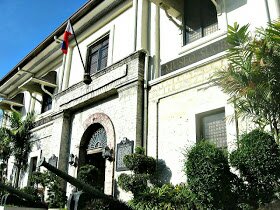
Museo Sugbo is the Cebu Provincial Museum located in Cebu City, Philippines. Located at what was once the Cebu Provincial Detention and Rehabilitation Center (CPDRC) on M. J. Cuenco Avenue in the old Spanish-era district of Cebu called Tejero. It is some four blocks north of Plaza Independencia. Designed in 1869 by Domingo de Escondrillas, the lone architect in Cebu at the time, the Cárcel de Cebú was originally proposed as the Carcel del Distrito, the main prison for the Visayas District. After twenty years of use, a renovation was ordered in 1892, which added more buildings behind the main structure that now serves as the first six galleries of the museum.
For those people who loves history, this place is perfectly fit for you to visit. The museum is also a great place to witness the glorious past of Cebu by its various collections of rare artifacts and antiques which are part of the Cebu’s grandeur, don’t worry there’s a note beside on each artifacts and antiques. I believe that the place is also great for taking different kinds of photoshoots.
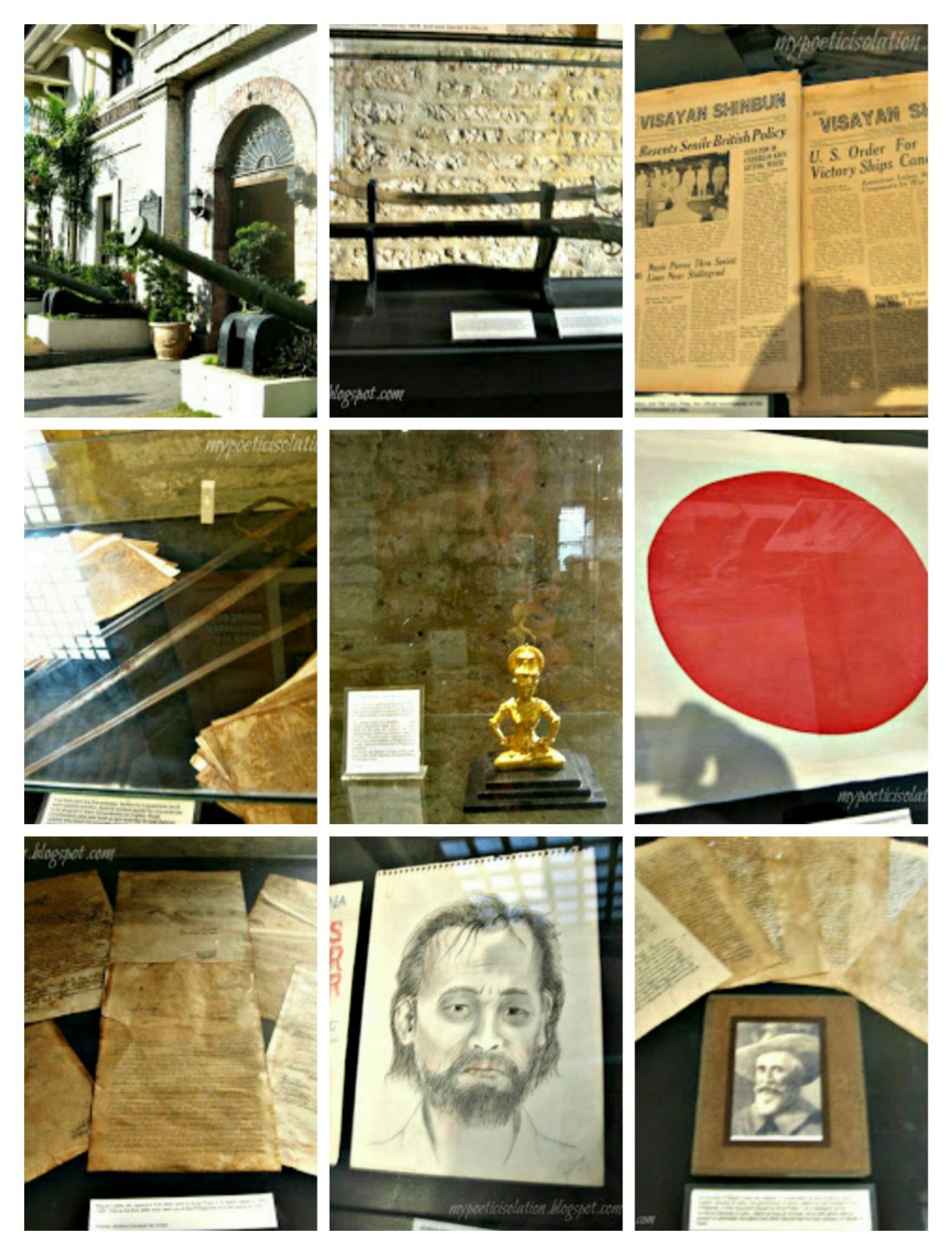
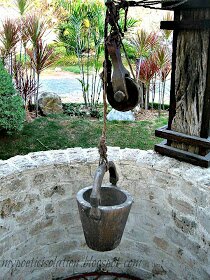
The whole museum is actually divided into four galleries: The two permanent and two special galleries with different artifacts based on the time they were found or their categories. There are too many items like different antique saints donated from the museum, The antique gold buddha, the military swords owned by the spanish encomiendos, The chinese and japanese porcelains, the original letters written by Miguel Lopez de Legazpi, A sketch made by Jovito Abellana after he was released from the Japanese prison, Japanese flag posted in one of Japanese military base during the Japanese occupation, A newspaper published during the Japanese era, The Japanese military jugs it has a interesting thing fact about these water jugs because their designs vary based on their ranks. And the typewriter on used during the American occupation, The sake cups used by the Japanese Generals occupying the country. So, you can see in the inside they treasure the lots of money used in the past. The Bayonet used by the Japanese soldiers in this kind of knife were used by the Japanese soldiers to demonstrate cruelty. As what I’ve read, babies were thrown upwards and then catched by the tip of a bayonet. So a bayonet (from French baïonnette) it is a knife, sword, or spike-shaped weapon designed to fit in, on, over or underneath the muzzle of a rifle, musket or similar weapon, effectively turning the gun into a spear. And there’s also a camera used by a journalist during the American occupation, the Surroundings are the photographs and post cards issued at that time and some bus tickets own by Corominas. (brown cards below the camera) and they have a anting-anting of Leon Kilat. It was said that he wore this as an interior clothing and etc. This antiques and artifacts are the evidence that in the past we colonize by the spaniards and etc. Lastly, there is a wishing well at the back portion of the museum and you can also see the canon that is use in a war from the past.
The whole museum closes at 5:30pm, some rooms close at 5 so we really did took our time efficiently to visit all the rooms in the museum and check out everything. Btw, the museum also had their own gift shop and coffee shop. They said its underground used to be a prison during the Japanese Era.
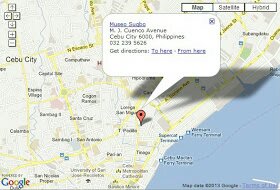
Museo Sugbo is located in M.J. Cuenco Avenue in the old Spanish-era area of Cebu named Tejero.
Tips how to get there.
The Cebu Provincial Museum is located in M.J. Cuenco Avenue. If you are coming from Mabolo or Mandaue take a jeepney with signage “Marteres” AND “Cathedral”. This museum is a few walks before reaching the corner of T. Padilla and M.J. Cuenco.
From Maguikay, Mandaue Coliseum, or Mabolo area, take a 21D jeepney. It passes by the front of Museo Sugbo. Fare from Maguikay is P10 per person, from Mabolo P8.
If you are in SM area, ride 01K and tell driver that you will get off in the corner of T.Padilla and M.J. Cuenco. Note though that you will have to walk 2 blocks to reach Museo Sugbo.
If you are coming from Colon, take 01K, it also passes by the Museum on the jeepneys’ way to SM and Cebu North Bus terminal. So therefore if you are on a DIY Cebu City Tour and you are already in the Cebu Heritage Monument area in Colon or Parian District and you want to check out the galleries of the Museo Sugbo, you can ride 01k. 01k passes by the Colon Obelisk.
When the 01k jeeps reach the end of Colon Street ( you’ll know because you will see the Obelisk), it will right turn all the way to Cebu Cathedral and then will left turn on the side of Patria Building until it reaches M.J. Cuenco Ave. When your ride reaches the corner, it will take another left turn, you will then be already cruising through M.J. Cuenco Avenue. A few minutes after, you’ll be by the side of the Cebu Provincial Museum.
Entrance Fees:
Adults: P30 (Filipinos), P75 (Foreigners), P75 (Balikbayans)
Students: P10 (Filipinos), P50 (Foriegners), P50 (Balikbayans)
Senior Citizens: P10
Museo Sugbo is open from Mondays-Saturdays at 9am-5:30pm.
If you wanna know more about the museum you may ring them with this numbers: (032) 516-2205 or (032) 239 5626
 Aventurier