
Category: Uncategorized
“Genesis Valley”
These are the days of dreadful deadlines, of worsening traffic conditions. If not treated immediately, one might breakdown from all the daunting tasks prompted by society. That is why the weekend gives a perfect breather – a time to bring back the energy lost. Well, several kilometers away from the busy streets of the city lies a serene sanctuary that will definitely give you the escape you’ve been wanting to have – Genesis Valley Mountain Resort.
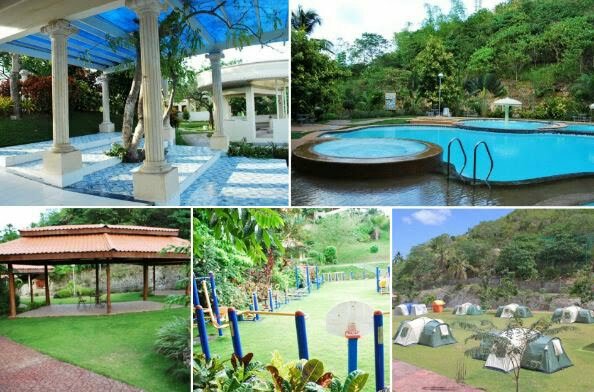
Located at the secluded part of Cabangahan, Concolacion, is a place that is ideal for in-depth reflection and bonding with family and friends. Genesis Valley Mountain Resort is actually a private property which was eventually made open to public. With its enormous space, the resort is perfect for teambuilding, outdoor activities, family gathering, receptions, and even soul searching.
Here are the accommodations available for your overnight or longer stay at Genesis Valley resort.
The Clubhouse
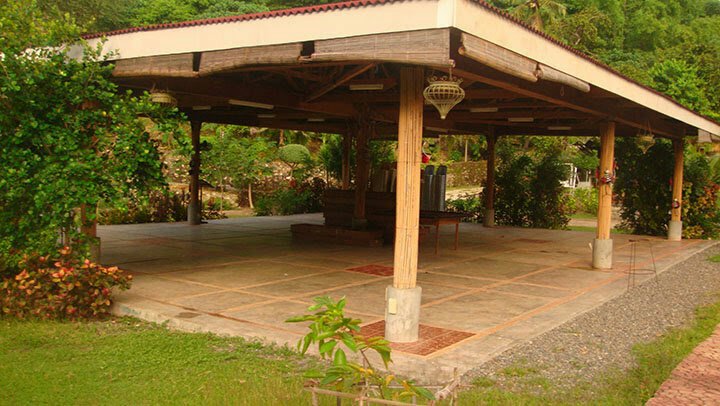
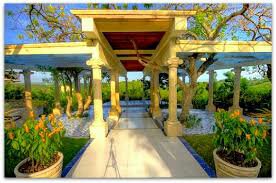
This house can accommodate up to 180 guests. That means that you have a special event to get this facility. It would cost you a reasonable P5,000 only to use this clubhouse.Logically, since this facility accommodates larger number of guests, the management offers a catering service, which they call Senens Catering.
Pool-side Villa
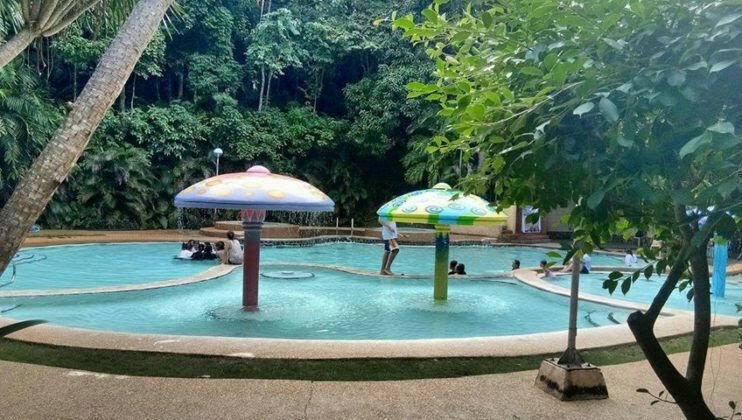
The villas have built-in umbrellas with tables and benches where you can relax and enjoy while eating your snacks and sipping your drinks. If you come with your family or some friends, you can use this villa located by the pool’s side. The villa has 2-bedroom guesthouse with a kitchen, living and dining room. The rate is Php 6,000 per night.
Kubo Rooms (huts)
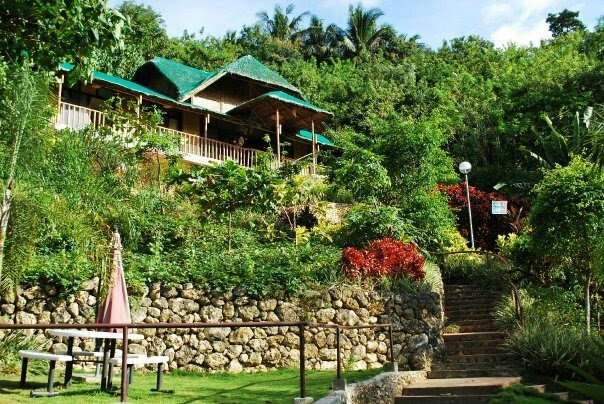
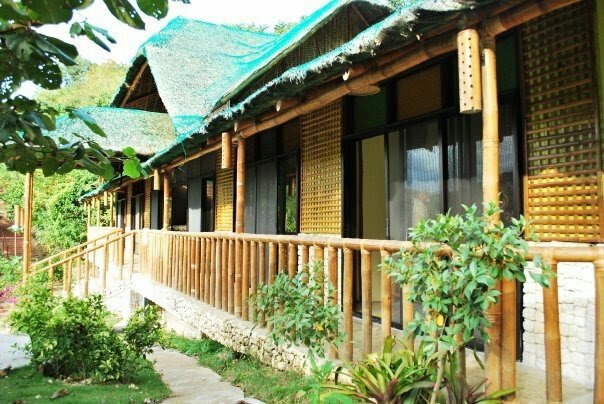
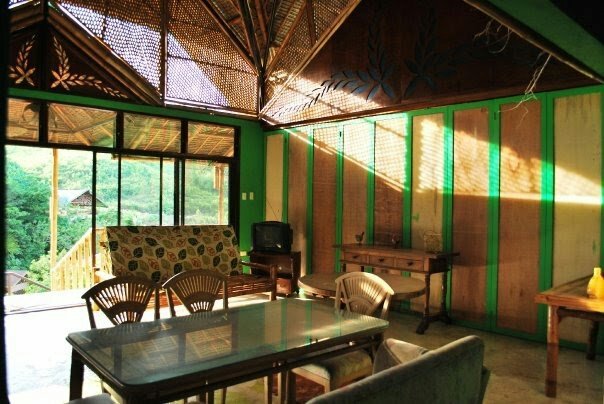
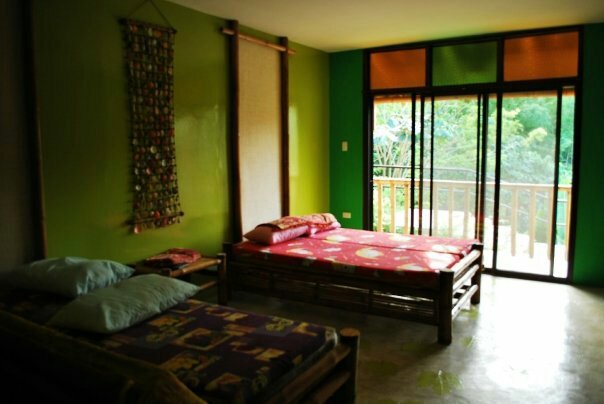
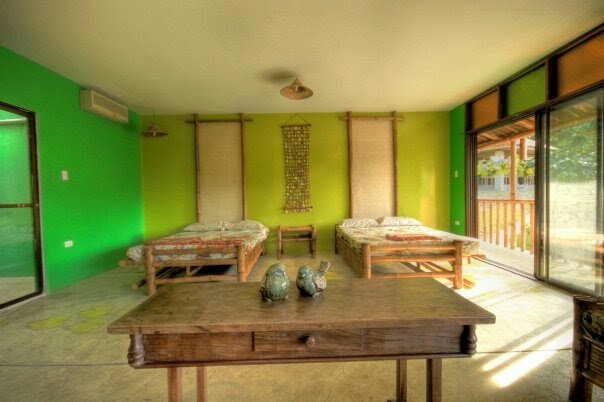
These rooms are good for 2 adults and 2 kids, which means ideal for a family with 1 or two kids. I’m sure that if you have one more kid you just need to pay additional charge to squeeze in! It will cost you 2,000 pesos a night’s stay.
Tents
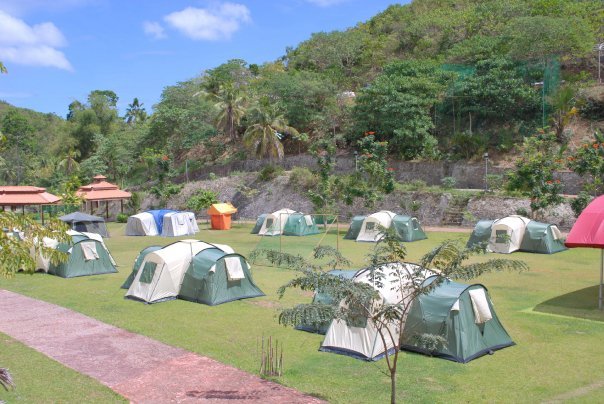
These tents accommodate from a minimum of 15 occupants. Surely, you can squeeze in more friends or just rent other tents.
Swimming Pool
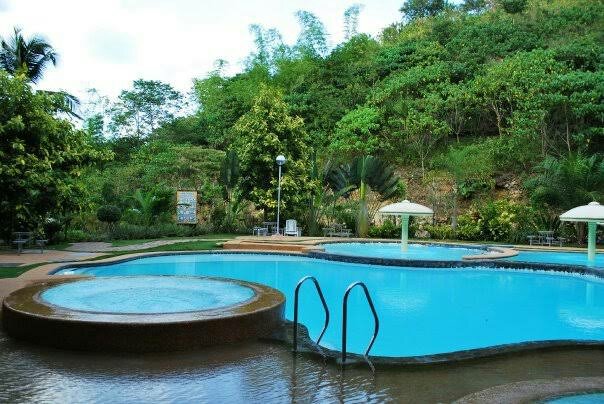
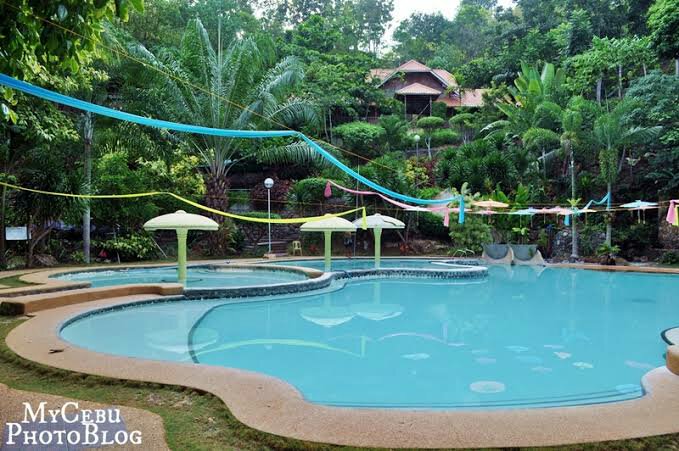
If you want to dip in or swim into the pool you may have to pay for swimming pool use. It would be a fantastic to experience dipping in into a cool water of a pool located in a mountain resort.
What can I find there?
Though located away from the city, the resort boasts of its big playground, exercise facility, swimming pool, jacuzzi, small aviary, and private rooms that will surely cater the needs of every guest.
If you wish to find out more about this special place, you may use the contact details below.
Address: Cabangahan, Consolacion, Cebu, Philippines
Telephone: (032) 346-5291 to 99
Office Days: Monday – Friday
Office Hours: 8:00am – 5:00pm
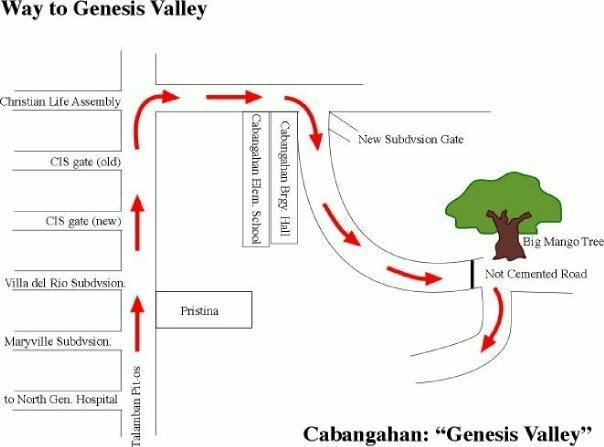
To get to this place if you take a public transport, call a habal-habal (motorbike for hire) from Fooda Consolacion for Genesis Mountain Valley Resort.From Pit-os to Cabangahan, you can also take the habal-habal to get to the resort. It will cost you less than a dollar (US), only 25 pesos. Whichever way you prefer, you would always end up to this great place!
HOW TO GET THERE?
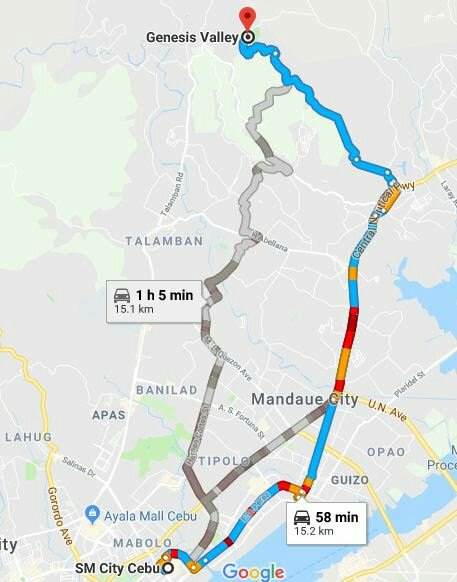
OPTION 1: Ride a jeepney going to Consolacion (from SM City Cebu)
Ask the driver to drop you off at Fooda Consolacion. Near Tinong’s Bakery, hire a habal-habal to take you to Genesis Valley. Fare may range from P30 – P80. Make sure you haggle nicely so you get a fair price.
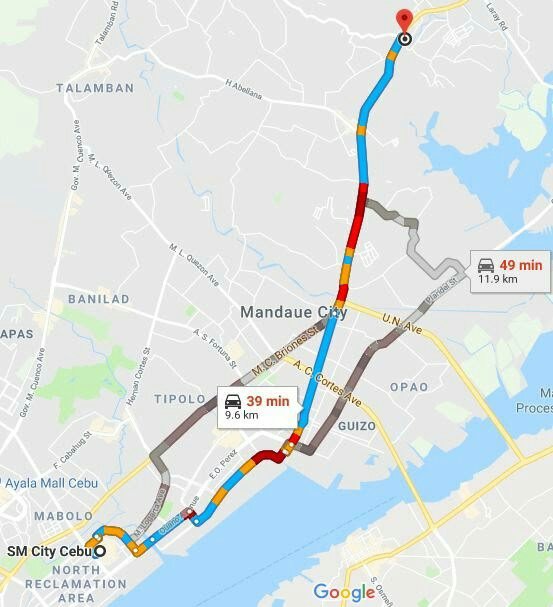
OPTION 2: Ride a jeepney bound for Pit-os, Talamban (from Ayala)
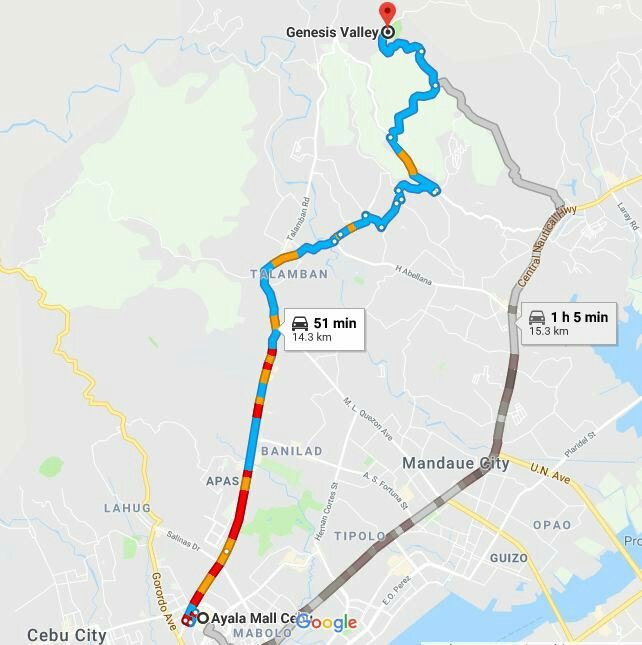
Ask the driver to drop you off at the gasoline station. From there, ask a habal-habal driver to bring you to Genesis valley.
For bookings and inquiries, feel free to call them at these numbers (032) 3462078 / (032) 3462086 / 0917-631-6041 look for Ms. Shiela or Gang2. You may also check them on Facebook for up-to-date transactions.
NOTICE: Rates may change without prior notice. So you better call them ahead to verify.
Enjoy the beauty of nature and have a happy and peaceful
RATES
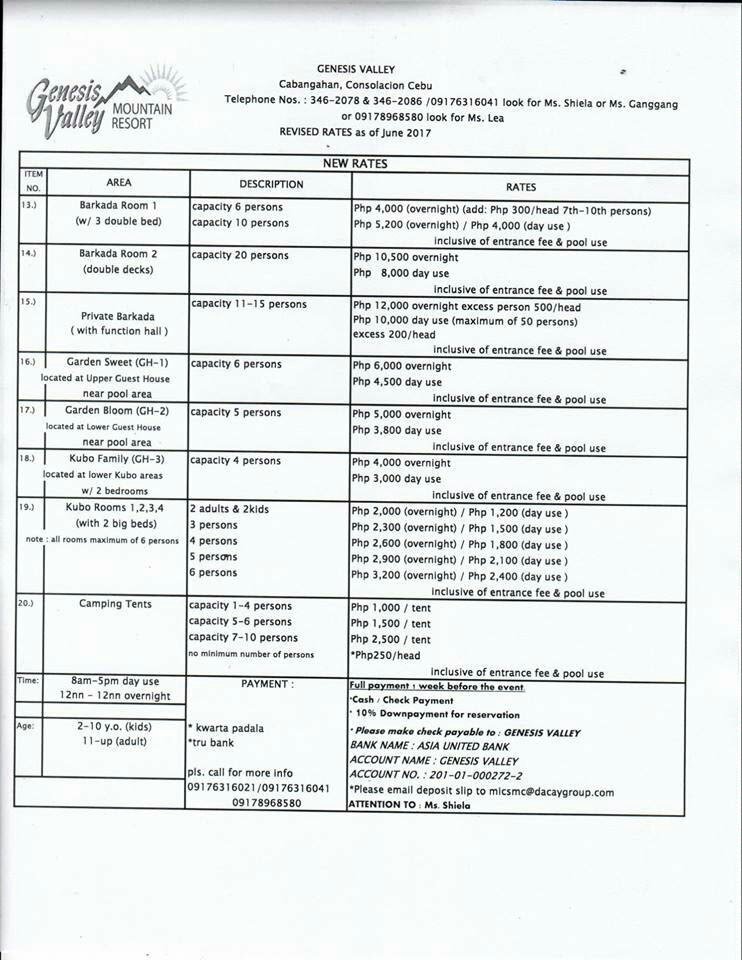
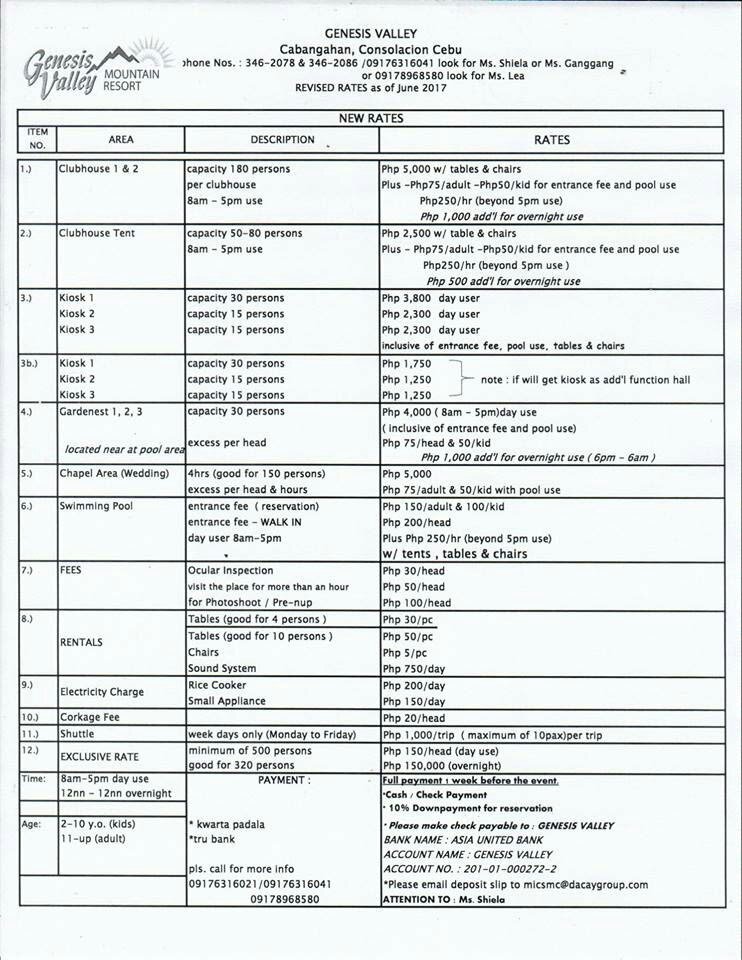
For only P200, one can already enjoy all these amenities. Room rates and discounts are available as follows:
Genesis Valley Mountain Resort Rate
P150 – entrance fee for kids
Discounted entrance fee rates:
P1,500 – good for 1 -10 persons
P2,7000 – good for 11 – 20 persons
P3,600 – good for 21 – 30 persons
P4,300 – good for 31 – 40 persons
P100 – good for 41 and above
P250 – tent rental inclusive of entrance fee
P5,000 – Clubhouse good for events (can accommodate up to 180 guests)
P2,000 – P6,000 – room rates depending on the number of individuals that will use the rooms
Free corkage for food but there are available carenderia and eatery inside and outside the resort. Keep safe always and enjoy your vacation.
Oslob: Whale Sharks and the Sumilon Island Sandbar
Why Should You Go to Oslob?
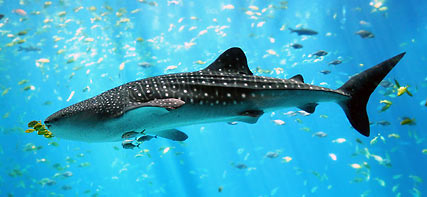
You’ll find Oslob at the Southern tip of the island of Cebu in the Cebu Strait. Tourists enjoy going to this province because of the crystal clear waters and white sand beaches. The “close and personal” experience with the largest fishes in the world is also a must-do experience.
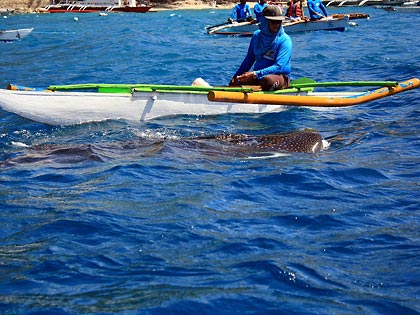
At barangay Tan-awan there are several resort to choose from that will provide boats, guides, lifejackets, goggles and other stuff you will need for the encounter with the whale sharks. There were six of maximum number that could be accommodated on these small craft plus two boatmen/guides.
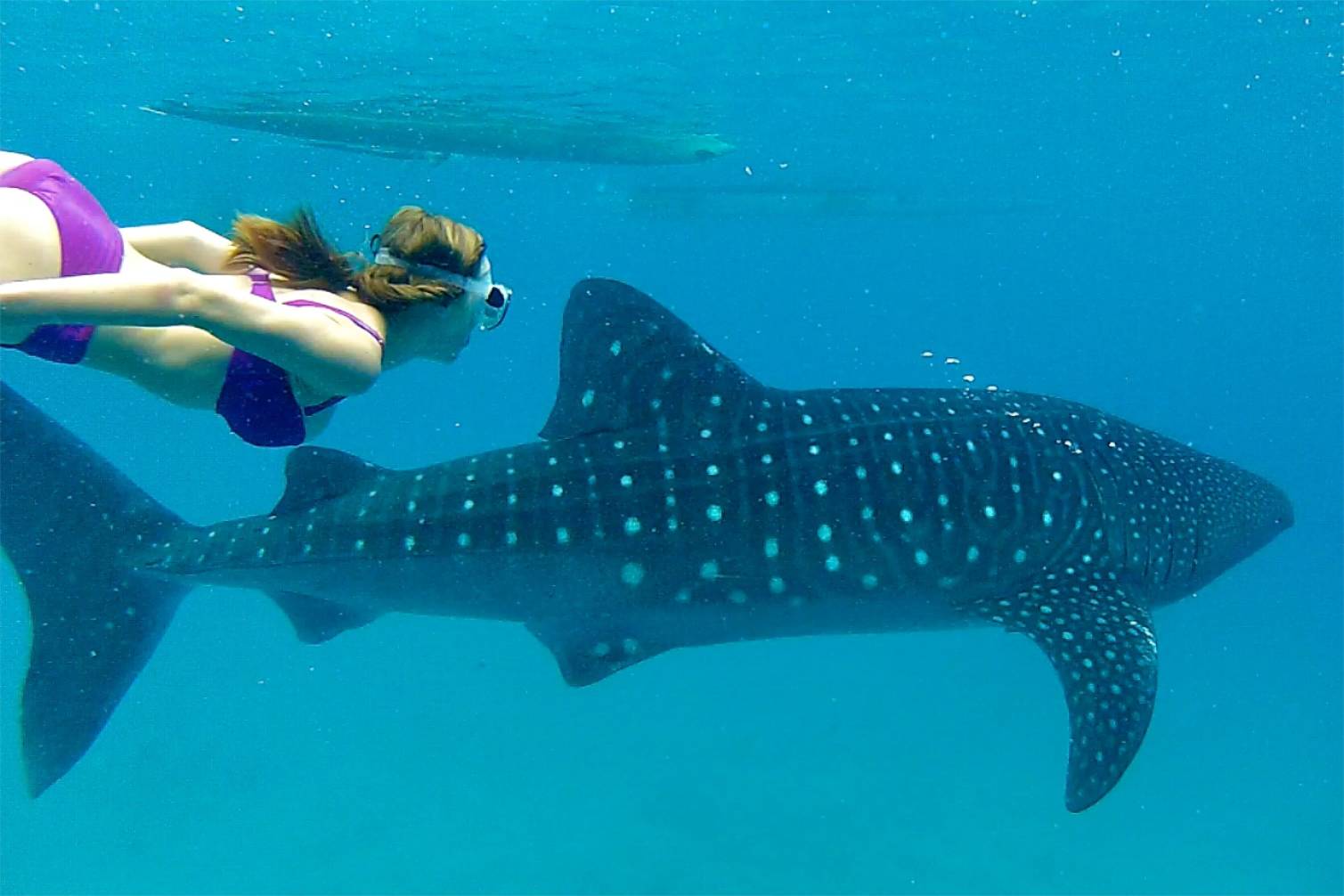
You can already have a good view of the whale sharks from the boat because the waters off Oslob are quite clear. But snorkeling underwater will give you an even more dramatic view. There are strict rules and procedures in place such as no touching of whale sharks, no swimming closer than 4 meters from the huge fish and no putting on of sunblock lotion (which is toxic to the sharks). You won’t really realize how big these guys are until you see them below water level since some are feeding from a nearly vertical and stationary position. Whale sharks however pose no significant danger to humans and are docile or gentle animals. Younger whale sharks even play with divers at times. Whale shark watchers are only allowed up to 30 minutes for the interaction but this can be stretched out to 45 minutes on weekdays. Whale shark watching hours are limited from 6:00AM to 12:00 PM.
Sumilon Island’s Sandbar
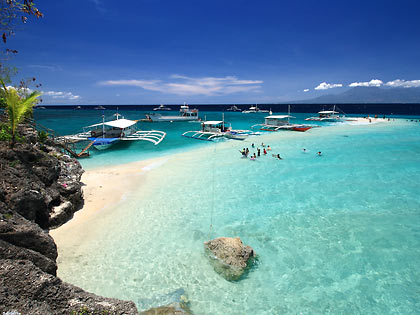
Sumilon is actually privately owned with a resort in place: the Bluewater Sumilon Island Resort. It is not really a place for shoestring travelers but the resort owner allows non-resort guests to stay at the sandbar for a minimal fee. And this sandbar happens to be the most remarkable natural feature of the small island. Sumilon is just 15 minutes away by motorized banca or outrigger boat from Oslob.
Other Places to Visit In And Around Oslob
1. Tumalog Falls.
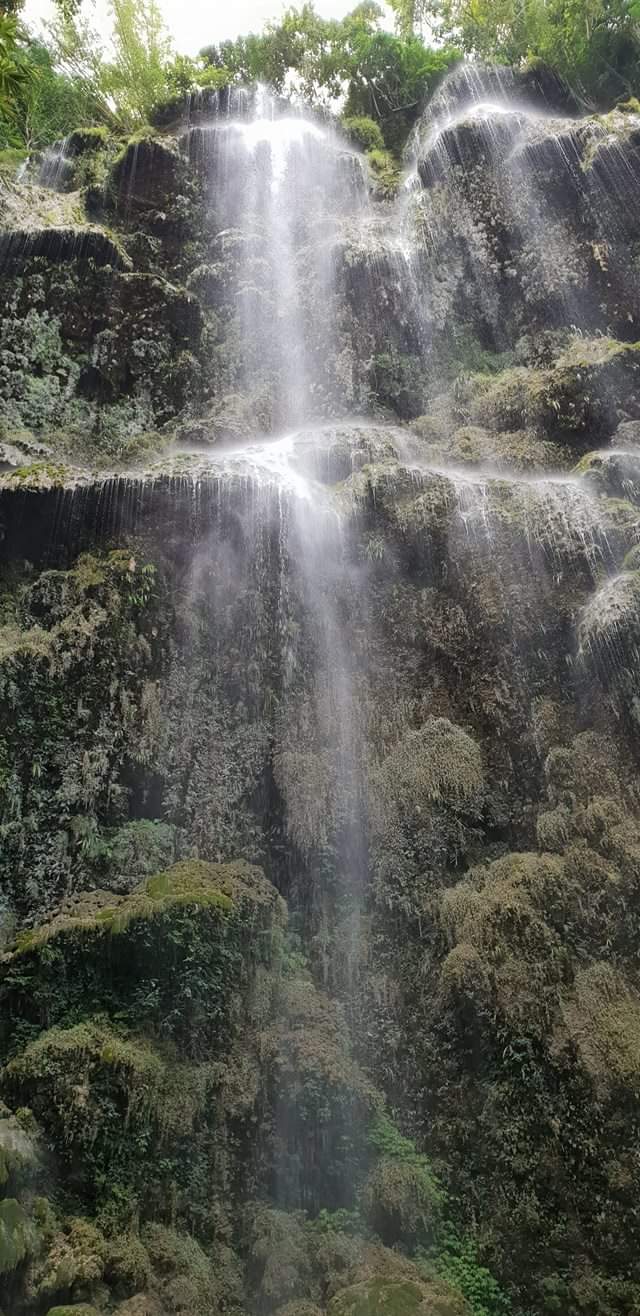
This is just a 20 minute ride (by trike) and a short albeit steep trek from the town proper of Oslob. Many whale shark watchers also include this in their itinerary since the falls are located just a kilometer away from the whale shark watching area. The falls are probably more than a hundred feet high but the drop is not that strong and the catch basin is up to neck-deep at most which makes it easy for people to go directly under the falls and wade or swim in the catch basin.
2. Oslob Heritage Park.
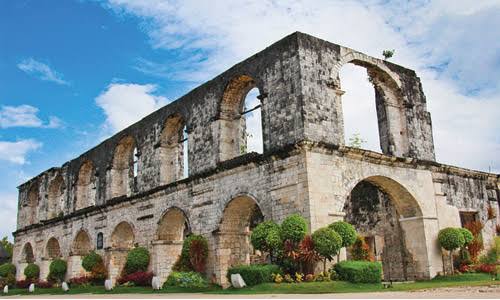
Another destination just a short ride away from the whale shark watching resorts, the Oslob Heritage Park includes preserved Spanish colonial era buildings such as the Cuartel or military barracks and the Baluarte a fort and watchtower built in the early 19th century to give early warning of and to repel Moro raiders. Other destinations are the Parish Church of the Immaculate Concepcion and the Oslob Museum. You can arrange with the tricycle drivers or with a resort in Oslob to take you here.
3. Santander.
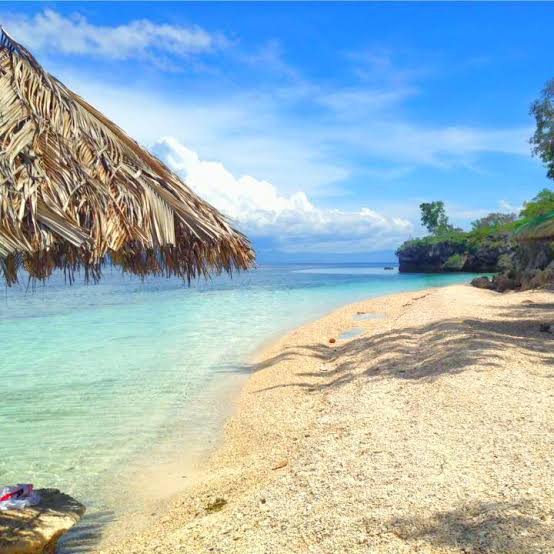
Named after a Spanish city, this town has a charming coastline of white sand beaches and crystal-clear waters. Lilioan port where we disembarked from the ferry from Dumaguete is part of this southernmost Cebu municipality and is surrounded by beach and dive resorts. Pebble Beach may also be found in Santander.
How to Get There
Oslob is located in southern Cebu but is only a short boat and bus ride away from Dumaguete. The actual whale watching is located at Tan-awan, a barangay of Oslob town. If you’re coming from Dumaguete, head for the port at Sibulan, a town located just north of Dumaguete and 6-7 kilometers/20-30 minutes away from Dumaguete City proper (the airport is also located in Sibulan). You can hire a trike to Sibulan port (which most likely costs somewhere between P60-P100 since it’s a special trip) or take a multicab which is cheaper.
At Sibulan port, take a fast craft ferry or pumpboat to Liloan port in Santander across the Tañon Strait for P62 and P45 respectively. A fast craft leaves every hour after 5AM and could complete the trip in 20 minutes. A bus is usually waiting at the Liloan port terminal apparently timed with the arrival of the fast craft from Sibulan to take passengers to Tan-awan in Oslob. This is another 30 minute ride for P40.
If coming from Cebu City, hop on a Ceres bus at the South Bus Terminal which goes all the way to Oslob (3-3.5 hours travel time). Either way it’s better to leave early in the morning and to time your arrival at Oslob between 9AM and 10AM; whale shark watching is only up to lunchtime.
You can check in at any resort in Tan-awan for whale shark watching. The cost (besides entrance fees) are P300 for locals and P500 for foreigners if watching only from the boat. If snorkeling, the fees are P500 and P1,000 respectively. These rates include the use of snorkels. Underwater cameras are also available for rent at P500 each. You can ask the boatmen to take your picture underwater with the whale sharks. You will also need to bring a memory stick to store the pictures otherwise you have to shell out P50 for a CD.
If you want to visit Sumilon Island’s sandbar after the whale shark tour make the arrangements with your resort before setting out on your whale shark watching. Boat fees range anywhere from P1,500 to 2,500 depending on the size of the boat. (We got ours for P1,500.) There’s a P50 entrance fee per person for Sumilon. The boat ride to Sumilon is only 15-20 minutes. If you’re taking lunch at Sumilon you can order packed lunch at any of the food establishments along the beachfront at Oslob. Have a great trip!
Huma Island, Palawan
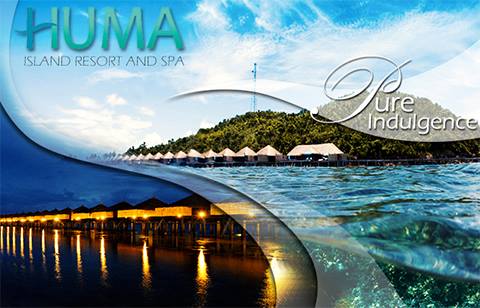
HExperience Huma Island Resort, an island full of adventures and indulgence!
Longing for a soothing and magical tropical getaway that will put you into a state of euphoria? Sksycanner suggests that you take a break from your hustle bustle city life, and spend a retreat at the Huma Island Resort! Cradled majestically in the dazzling turquoise waters of the “Philippine’s Last Frontier”, the Huma Island Resort is a fabulous refuge that lures weary travelers who are seeking tropical bliss and a personalized experience of discovery and exploration. Blending cozy accommodations with fun-filled adventures, heavenly dishes and world-class facilities, this secluded paradise surely has a medley of treats to offer to its guests.
A perfectly remote location Huma Island Resort is nestled grandly in Busuanga, Palawan, a secluded tropical haven famous for its natural grandeur and wildlife. Often heralded by travel specialists as one of the world’s top diving sites, Busuanga is blessed with gorgeous sparkling waters that burst with prismatic marine life and cloak the mystical sunken ruins of dozens of historic Japanese planes and warships. Of course, the resort also has a very laid-back feel that would give you a relaxing respite.
A filling gastronomic experience awaits you at Huma Island Resort
Whether you’re in the mood for something sweet or hot and spicy, Huma Island Resort has a wide array of hearty and mouthwatering flavors to please your palate. After all, it is home to six gourmet themed dining stations and two wine cellars that give you an unforgettable global culinary experience. You may fill your grumbling stomach with fresh grilled seafood at the On The Harbour, partake exceptional Lebanese dishes at Al Fairuz, or indulge in exquisite Italian staples at Al Dente.
Cool places to chill and relax after treating yourself with a filling gastronomic adventure, you can unwind and sip a few delightful glasses of wine at Rudi’s Wine and Cheese Bar. Alternatively, you can hang out, enjoy scenic views and enjoy live performances while sipping luscious cocktails at the Blu Bar.
Getting there is nowhere as difficult as you think although it is remote, and miles away from the country’s buzzing urban jungles, getting to Huma Island Resort is pretty easy and simple. Busuanga, by air, is less than an hour away from the Metro Manila, and is accessible daily via commercial flights from NAIA. And from Busuanga Airport, you just need to take a 1.5-hour road trip to Sagrada port, followed by a short boat ride to this beautiful resort.
Affordable flights to Busuanga, you can find affordable flights to Busuanga through our award-winning mobile apps and search tools. However, for a more select and exclusive transfers, Huma Island Resort’s guests can now flyvia private sea plane which flies directly from Manila Bay to the resort for only one hour and 15 minutes.
A collection of snug villas, Huma Island Resort has 81 ultra cushy villas with inviting indoors and an eye-catching modern high ceiling design that evokes a sense of utter freedom and space. What’s more, these villas have sun decks where you sunbathe privately or gaze at the lovely panorama of the blue skies and pristine sea. To top it all off, each villa has a plethora of modern amenities to make your stay pleasant and comfortable. By the way, there are four options available for your villa accommodations in this resort – Presidential Suite (294 square meters), Family Suite (141 square meters), Beach Villas (126 square meters), and Water Villas (102 square meters).
Plenty of recreations and other facilities, Huma Island Resort, with its astounding array of facilities, can amuse and entertain its guests in many different ways. Here, you may spend a few hours enjoying its awesome facilities and recreational options, including sunset/sunrise fishing, archery range, jetski, hobiecat, kayak, intro dive, yoga classes, in-house movies, infinity pool, private outdoor Jacuzzi, and a whole lot more.
One-of-a-kind spa treatments when life feels like an endless parade of chores, paperwork and bills, head off to Huma Island, and pamper yourself with its rejuvenating spa treats. Their spa features proficient treatments based on the holistic healing philosophies of Ayurveda and other traditional Asian therapies. As an added bonus, getting a spa treatment at Huma Island also offers a wonderful experience like no other. Home to the first ever over-water spa treatment pavilions in the Philippines, the resort has a spa center with glass flooring, allowing you to catch a glimpse of Busuanga’s colorful and beautiful marine life.
Nearby attractions for nature lovers and outdoor enthusiasts, there are a few natural wonders and attractions to explore near Huma Island Resort, including Maquinit Hot Springs, Calauit Island Game Preserve and Wildlife Sanctuary, Black Island, Calumbayan Island and Pass Island.
They have a lot of dining outlets to satisfy all known cravings unlike most resorts that have only 1 or 2 dining venues, at Huma Island, they got over 6!
From exceptional Lebanese cuisine catered at Al Fairuz restaurant, to modern Italian specialties at Al Dente, On The Harbour serving impeccably fresh seafood from the grill, Rudi’s cheese & wine bar, to sipping cocktails with a spectacular view at Blu Bar, while all-day dining at Waves restaurant serves fresh international fare. Aside from these gastronomic destinations, I even heard they will be constructing 2 more outlets soon!
How to Get Here
1. Private Sea Plane – Fly directly from Manila Bay to Huma Island Resort & Spa for approximately 1 hour and 20 minutes. Seaplane flights may be booked directly with seaplane providers.
2. Commercial Flights – Just an hour away from Manila by air, Busuanga, Palawan is accessible daily via Philippine Airlines and Cebu Pacific flights from Manila. From Busuanga Airport (airport code is USU), guests need to travel 1.5 hours by land to Sagrada Port followed by a 30-minute boat ride to the resort.
Tubbataha Reef National Park
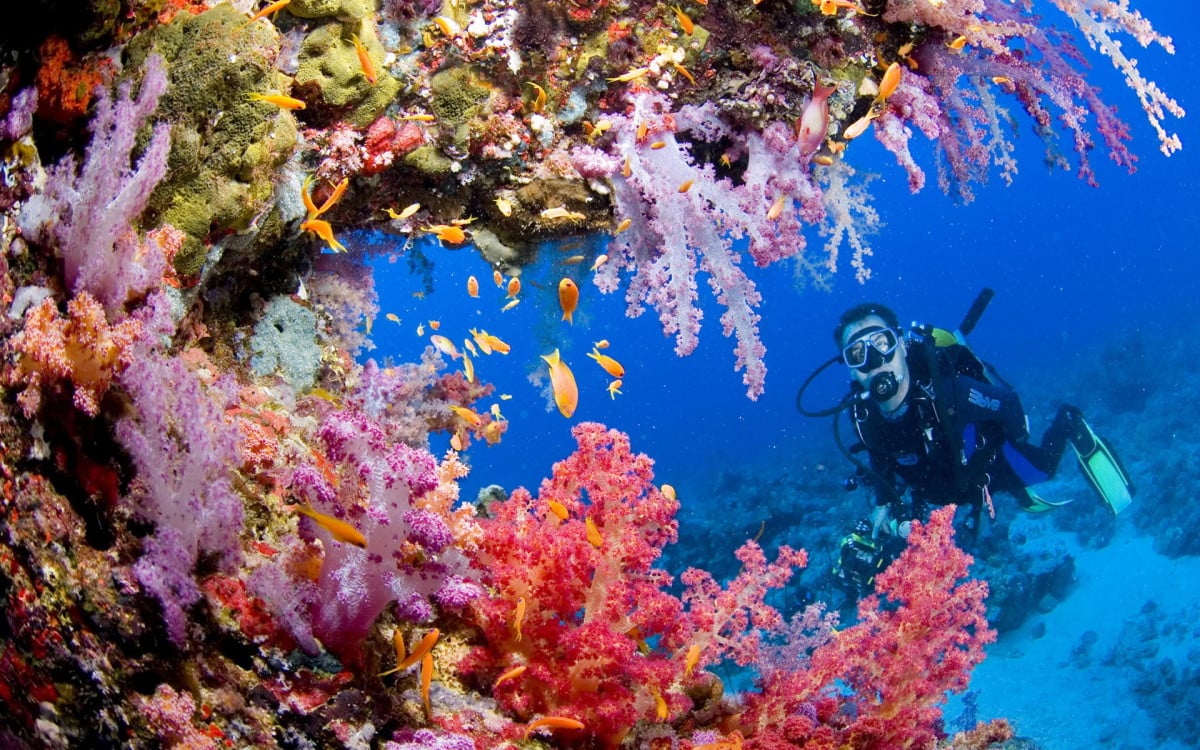
TTubbataha Reef is an atoll coral reef located in the Sulu Sea of the Philippines. It is a marine sanctuary protected as Tubbataha Reef National Marine Park. It is nominated at the New 7 Wonders of Nature.The word tubbataha is a combination of two Samal words: tubba and taha, which together means “a long reef exposed at low tide”.
Tubbataha is located in the Sulu Sea, 98 nautical miles (181 km) southeast of Puerto Princesa City in the Palawan Province. The reef is made up of two coral atolls divided by an eight-kilometer (5 miles) wide channel. The South Atoll, the smaller of the two is five kilometers in length and three kilometers in width; while the North Atoll, the larger of the two is 16 kilometers (9.9 mi) long and five kilometers (3 miles) wide.(Knipp 22) Each reef has a single small islet that protrudes from the water. The atolls are separated by a deep channel 8 km (5.0 mi) wide.
There are no permanent inhabitants of the islets or reefs. Fishermen visit the area seasonally, establishing shelters on the islets. The park is visited by tourists, particularly divers. Trips to Tubbattaha from mid-March to mid-June are all vessel-based; the park is about twelve hours by boat from Puerto Princesa City. Tubbataha is considered as the best dive site in the Philippines and the diving dedicated ships that operate during the “Tubbataha Season” are usually booked years in advance especially during the Asian holidays of Easter and “Golden Week”.
Tubbataha has become a popular site for seasoned sports divers because of its coral “walls” where the shallow coral reef abruptly ends giving way to great depths. These “walls” are not only wonderful diving spots but they are also wonderful habitats for many colonies of fish. There are giant trevally (jacks), hammerhead sharks, barracudas, manta rays, palm-sized Moorish idols, napoleon wrasse, parrotfish, and moray eels living in the sanctuary. There also have been reported sightings of whale sharks and tiger sharks. Tubbataha is even home to the hawksbill sea turtles (Eretmochelys imbricata) which are endangered species. (Knipp 24)
Over 1000 species inhabit in the reef; many are already considered as endangered. Animal species found include manta rays, lionfish, sea turtles, clownfish, and sharks.
Vivid corals cover more than two-thirds of the area and the waters around the reef are places of refuge for numerous marine lives. The seemingly diverse ecosystem of this sanctuary rivals the Great Barrier Reef – having 350 coral species and 500 fish species. (Knipp 22, 24) In June 2009 an outbreak of the crown-of-thorns starfish was observed, possibly affecting the ecological functioning of this relatively pristine coral reef. [1]
Aside from being a marine sanctuary, Tubbataha is also renowned for being a bird sanctuary. A lighthouse islet, at the southern tip of the South Atoll, supports a large number of seabirds which nest there. Around the Tubbataha, there are tens of thousands of masked red-foot boobies, terns, and frigate birds resting during their annual migrations. To minimize any external intrusions, the Philippine Coast Guard maintains a small monitoring station on one of the many permanent sand bars.(Knipp 24)
The Tubbataha National Marine Park, located at the Central Sulu Sea, is a marine sanctuary containing a reef of enormous size. It was established on August 11, 1988 with an area of 332 km² (82,000 acres). In 2006, President Gloria Macapagal Arroyo, through an Executive Order, increased the boundaries of the park by 200%. It is now 968.24 km² (239,000 acres) in size and is guarded by armed rangers 24 hours/ 7 days a week.
Declared a World Heritage Site by the United Nations Educational, Scientific, and Cultural Organization (UNESCO) in December 1993, it is under protective management by the Philippines Department of National Defense (DND). It is under technical supervision by the Palawan Council for Sustainable Development (PCSD) & the Department of Environment & Natural Resources (DENR). It is administered as part of Cagayancillo town on Palawan. It is also nominated in the new 7 wonders of nature.
The Tubbataha National Marine Park is open to live-aboard diving excursions between the months of April to June. It is in this period where the waves are most calm. As of March 2011, the park entrance fee is pegged at USD $75.00 or PHP 3,000.00. Due to global warming, it is advised that divers book their trips towards the middle or end of April as the waves are still strong and may cause problems for dive excursions and underwater visibility.
Almost all current threats are low to very low but vigilance is needed to maintain these threats at a low level. Potential threats, mainly related to climate change, are mostly beyond the control of Park managers and the Philippines but are considered to be high if they occur.
Although the sand bars around Tubbataha are considered off limits to human beings, tourists are allowed to set foot at the Ranger Station where they can purchase souvenirs and tour the facility.
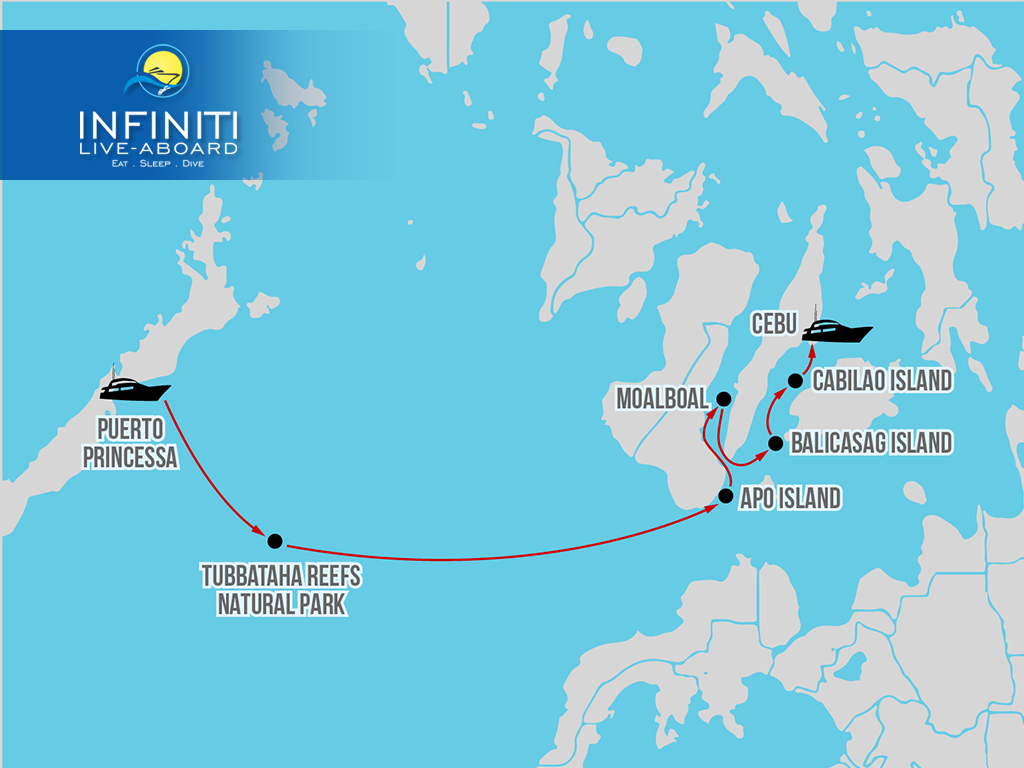
Best way to have an island hopping going back to Cebu
Departure Port: Puerto Princessa
Return Port: Cebu
Duration: 12 Days 11 Nights
Experience Level: Open water certified-20 min logged dives required
Our Guide will pick you up from the airport or your hotel and bring you to the Infiniti, where after a brief welcome and safety briefing, you will be assigned cabins. The cruise director will have a full schedule of dives and excursions ready for you.
This final dive trip of the Tubbataha Reef dive season is a transition trip where after exploring the Tubbataha Reefs Natural Park we sail off towards the Visayas Archipelago and disembarks in Cebu after exploring Visayas and Bohol.
Dive Sites
Located in the Sulu Sea, and about half a day’s boat ride from any major town, Tubbataha Reefs Natural Park is one of Asia’s best diving spots. Tubbataha reef is made of two coral Atolls-The North Atoll and the South Atoll.
With over 600 species of fish and 300 species of corals, nesting turtles, dozen species of sharks and dolphins, it offers a vastly biodiverse diving experience! The dive sites visited on this trip include and are not limited to the Malayan wreck, Wall Street, Amos rock, shark Airport, Washing Machine and the ranger station on the North Atoll. On the South Atoll, we will visit South West Wall, Staghorn Point, Delsan Wreck, Black Wreck and T wreck.
Apo Island Reef: Sailing through the Sulu Sea, we reach the Apo Island Reef to explore its beautiful coral gardens and marine life.
Moalboal and Pescador: We go on to explore Moalboal with its shoals of shimmering sardines and sea snakes, and Pescador Island with its shadow reef teeming with triggerfish, schools of snapper, turtles and macrolife .
Balicasag: On the final leg of this incredible journey, Balicasag in Bohol, a marine sanctuary where beautiful corals are teeming with reef life is great place for snorkeling and drift dives.
Cabilao Island: With its Barracudas, dogtooth tunas, giant trevallies and also macro marine life like sea horses and nudis make up for a memorable diving experience!
Please Note: This is a sample itinerary and our cruise director can modify the route according to the weather, currents and diving conditions. We wish to give you the best diving experience of the region, but safety of all on board is the foremost concern and we will do our best to offer alternate locations in case any of the listed sites is not accessible at the time.
El Nido Palawan
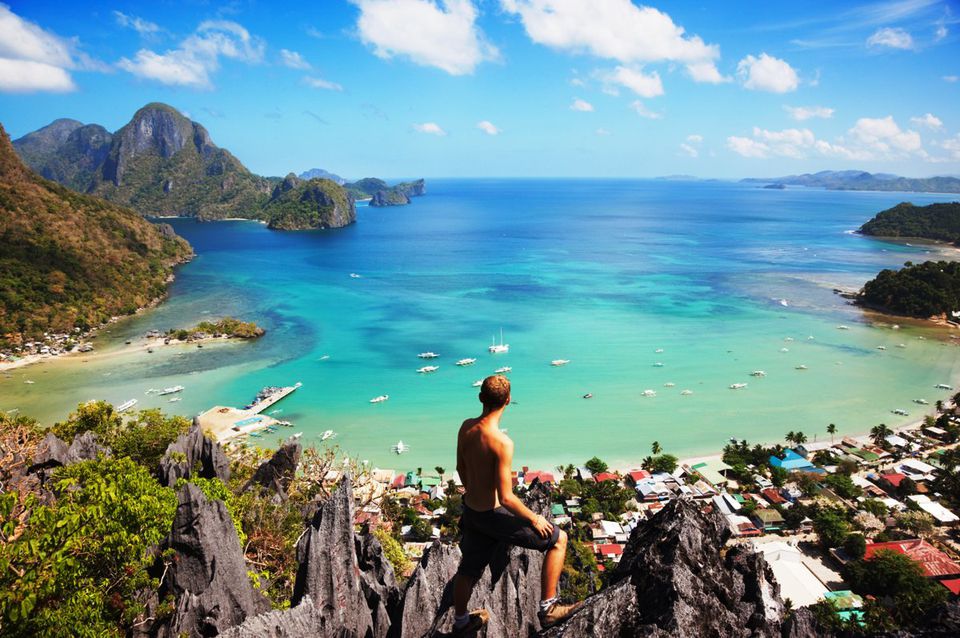
El Nido is one of the nicest place in the island Philippine. There is simple living, enormous landscape & seascapes with hospitable people. Around 1:15 hr ride on a 19 seater plane, half an hour land travel to El Nido town. You can’t compare the beauty of El Nido to, it’s different. It is somewhat similar to the virgin islands of Camiguin you’ll need to ride a boat and wander the islands of El Nido! It is really a wonderful and magnificent and you will love the sea foods! It’s very fresh!
El Nido is considered a showcase of Palawan’s geology and various wildlife It is one of the most important sites for biological diversity in the country and has been stated by the Philippine government as a protected area.
Conquered by towering marble cliffs that are homes to a number of tropical birds, El Nido is the source of one of the most delicious soups specially found in Chinese restaurants “the Nido Soup”. This soup consists mainly of the bird nests that abound in the area. Edible-nest Swiftlets (Collocalia fuciphaga) abound in El Nido. The nests of these birds are found in the crevices of the limestone cliffs and are the main ingredient of the health enhancing bird’s nest or nido soup. It is these nests that gave the place its Spanish name, El Nido. But El Nido is more than this. It prides itself in having the most beautiful seascapes in the province of Palawan, known as the country’s last frontier. Because of its utter splendor, it has also been called the island of the gods, heaven on earth that is El Nido.
El Nido is a municipality situated at the northwestern tip of the province of Palawan, Philippines. It is 430 kilometers southwest of Manila, and 238 kilometers northwest of Puerto Princesa City, Palawan’s capital. El Nido is bordered by the Linapacan Strait in the North, the Sulu Sea in the east, and the South China Sea in the west.
The Municipality of El Nido is composed of 18 barangays (villages) covering a total land area of 50,000 hectares. Its population of 27,000 people is a combination of native Palaweños, with a heavy presence of migrants from other parts of the Philippines. The world’s largest pearl was discovered by a Filipino diver in a giant Tridacna (mollusk) under the Palawan Sea in 1934. Known as the “Pearl of Lao-Tzu”, the gem weighs 14 pounds and measures 9 1/2 inches long and 5 1/2 inches in diameter. As of May 1984, it was valued at US$42 million. It is believed to be 600 years old.
It is the scenic landscape, crystal clear waters, and relative isolation that attracts and fascinates most travelers to El Nido. The 45 islands and islets and the surrounding sea present endless opportunities for adventure, nature appreciation, and even just simple amusements. El Nido’s majestic limestone cliffs are estimated to be 250 million years old. They stand guard over clear waters, with 200 species of tropical fishes, more than 100 species of corals, and three species of endangered sea turtles. El Nido’s forests are host to more than 100 species of birds, a large number of which are endemic to Palawan.
Kayaking in secret lagoons, mangrove tours, snorkeling or diving with colorful tropical fishes, hiking to the peak of an island, fishing, bird watching, exploring uninhabited islands, picnic lunches or sunbathing in a white sand beach. These are just some of the activities that can be arranged by El Nido Resorts.
Island Hopping is the main one, totally dedicated to the over 50 beaches in the marine reserve of Bacuit Bay. There are a number of places to hire boats including packages that include food and tour guides. Or do it yourself by walking down the beach and hiring a boat. On the other hand you can also hire kayaks, paddle boats or even go windsurfing! Fishing is also available here.
Scuba Diving is also famous, as there is a wealth of marine life and plenty of reef here. More advanced diving is also available. You can never bore of the islands, but sometimes you may hunger for something a bit different. No problem, El Nido have much more. Through the tourism office, you can book tours with the El Nido Tour Guides Association. They can take you Cliff Climbing which gives a wonderful birds-eye view. Try north of the town and you can go Cave Exploring, and also discover the Waterfalls.
Perhaps you favor to hit the dirt track and make your own adventure. Simply hire a Motorbike, fill up with gas and travel around away. North of the town there is a circular road taking you round both sides of the mainland. There are several places scattered around town that you can hire motorbikes; it will cost 1000 pesos per day plus fuel. If you prefer a slower look at the local scenery you can also hire mountain bikes in town. After a long day under the sun you may want to simply relax. The Alternative Center offers an array of Therapies including massages, detox, reflexology and more. A healthy menu is also served at El Nido beach resorts. Before you leave you may want to take a piece of El Nido with you. There are some Souvenir shops in town offering a variety of local handicrafts.
A number of bars offer different entertainment including billiard, dancing, live music, karaoke, and of course along the beach front the chance to relax and watch the beautiful view as the day comes to a close. There are many strangeness to El Nido, for example the electric power is from 1pm to 1am. Also you will not find any banks here, although you can change foreign currency and travelers cheques at a couple of places though at an increased rate. There are also no telephone lines so communication is mostly via mobile phones plus there are two internet cafes. Once you have been here you realize why. Enchanting El Nido is truly breathtaking; many leave, their lives changed by this magical place.
How to get there?
1. Flying from Manila to Puerto Princesa
Most tourists coming to El Nido land on Palawan island in Puerto Princesa International Airport, though a direct flight from Manila. The two main companies operating daily flights between the two cities are Cebu Pacific and Philippine Airlines.
2. Taking a van from Puerto Princesa to El Nido
The journey usually continues with a van direct from Puerto Princesa airport up to El Nido bus terminal. Your van transfer will take between 4:30 and 6 hours, depending on the time of the day, and the price for a seat is around P600 to P700.
3. Riding a tricycle to get to El Nido town
Finally, your van will stop in Corong-Corong bus terminal. This is located just 5 minutes away from El Nido Poblacion (the proper town) with a tricycle. You’ll just have to ask you to one of the drivers to take your hotel or guesthouse. During the day, the normal price is P15 per person, but at night, the rates goes up and the tricycle drivers will ask you P50 minimum.
So here you are, well arrived in El Nido!
Chocolate Hills
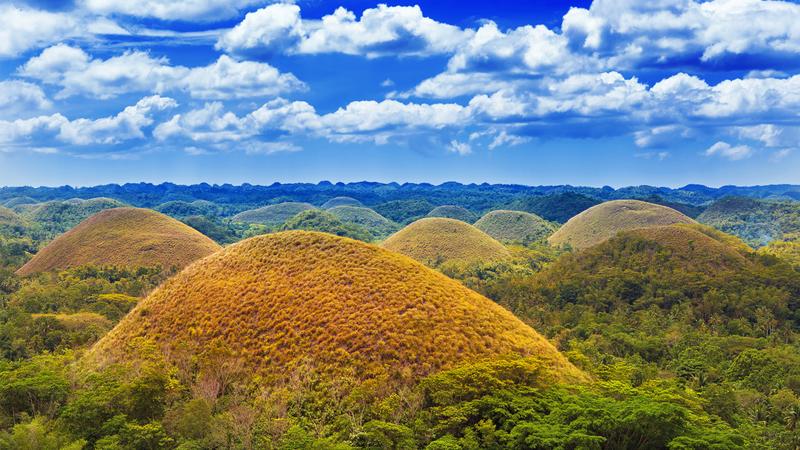
The famed Chocolate Hills of Bohol are not only two but more than 1,268 cone-shaped hills – a very strange geological formation that has baffled a lot of geologists. The hills are spread over an area of 50 square kilometers or more and vary in size from 30 meters to 120 meters in height.
The Chocolate Hills appear to be seemingly endless when viewed atop the hill in Carmen town. The viewing deck there gives you a 360° view of the hills “as far as the eyes can see”. It is more majestic when viewed from a plane – them appearing to be thousands of mole hills dotting out from verdant surroundings.
What’s unique with these limestone chocolate hills is that they are only covered in grass and the cone shape is more or less common to all although differing in size. The hills look chocolaty only during dry season when the grass withers and turns into brown and looks like giant chocolate kisses.
Grass species found to thrive on the hills are Imperata cylindrical and Saccharum spontaneum and several Compositae and ferns. Trees grow on the base of the hills and are lush and verdant rings around the almost bare cone-shaped hills resulting in its awesome natural beauty.
Likewise, the flatlands surrounding the hills are given to rice and corn farming and results in a beautiful green backdrop for the Chocolate Hills. Elevation ranges from 100 meters to 500 meters above sea level. Higher hills can be found but almost uniform cone-shaped hills are found in Carmen town.
The most acceptable geological theory of the Chocolate Hills of Bohol is that the hills were the result of thousands of years of weathering of marine limestone. Others say that the hills were formed ages ago by the uplift of coral deposits or that they erupted from the sea in a massive geologic shift, and the action of rain water and erosion for the past thousand years put in the finishing touches.
Considered sometimes as the “Eight Wonder of the World”, the Chocolate Hills has been declared as the country’s 3rd National Geological Monument by the National Committee on Geological Sciences on June 18, 1988 in recognition of its special characteristics, scientific importance, uniqueness, and high scenic value; and as such is among the country’s protected areas.
Proclamation No. 1037 was signed to this effect on July 1, 1997 declaring the hills as a natural monument and that they are now covered under the National Integrated Protected Areas System (NIPAS) with the Department of Environment and Natural Resources (DENR) as the lead implementing agency for its protection.
Furthermore, the Philippine House of Representatives introduced House Bill No. 01147 on July 6, 2004 wherein it was reiterated that the hills are a national patrimony and geological monuments, penalizing their plunder, destruction or defacement, and for other purposes.
Finally, on May 16, 2006, the DENR submitted the Chocolate Hills of Bohol to the UNESCO World Heritage for inclusion in the list of Natural Monuments because of its outstanding universal value, superlative natural phenomena or areas of exceptional natural beauty. The area is now in the Philippine Tourism Authority’s list of tourist destinations in the Philippines.
A tourist destination way before the white sand beaches of Panglao came to be known, it is now featured in the provincial flag and seal of Bohol to symbolize the abundance of natural attractions in the province.
The Chocolate Hills of Bohol are spread over an area covering the towns of Sagbayan, Batuan, Carmen, Bilar, Sierra Bullones and Valencia. Most of the hills though are found in Sagbayan, Batuan and Carmen, the later having the most uniform cone-shaped hills.
Two resorts have been developed: one in Carmen town called the Chocolate Hills Complex, and one in Sagbayan and known as Sagbayan Peak. The oldest resort of the two is the Carmen complex and is located in Barangay Buenos Aires about 5 kilometers from the town. Carmen town is 55 kilometers from Tagbilaran City.
The Chocolate Hills Complex is a government-owned and operated resort. The Carmen-LGU and the provincial government presently own the complex with the former managing the operation anchored on a 70/30 sharing of its net income. The complex has a restaurant, souvenir shops, hotel with swimming pool, and a viewing deck.
The newly developed “Sagbayan Peak” is a5-hectare mountaintop resort and recreation center which also has a viewing deck that offers a 360° view of the hills and the blue sea beyond. It is 18 kilometers from the Complex in Carmen town.
How to Get There
Buses bound for Carmen town or Sagbayan are available at the Dao Terminal in Tagbilaran City. Just ask the bus drivers to drop you off at the junctions leading to the resorts. In Carmen town, the road leading to the resort from the junction is only a 10-minute walk along a winding uphill road.
Vans are the most common means of transportation though, especially when traveling with a group. Aside from convenience and comfort, visitors can visit more places in a short span of time. Waiting for buses or public rides is time consuming.
White Beach at Puerto Galera
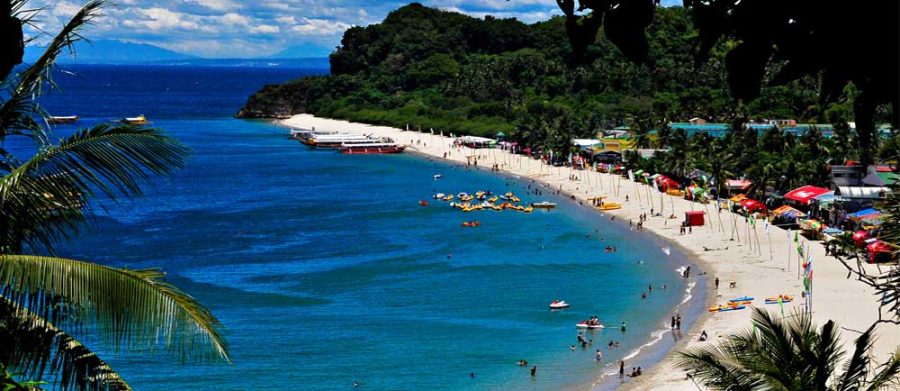
For the many visitors who have walked along the shores of Puerto Galera, they have described the place as a piece of paradise where one can bask in the magnificence of nature and partake in the many activities and leisures the resorts have to offer. After only several years of promotion and word-of-mouth, Puerto Galera has become one of the most desired tourist destinations in the Philippines, with thousands flocking to its beaches year after year.
This coastal town is well known among tourists for its numerous pocket beaches and many snorkelling and scuba diving spots. The area was designated a Man and Biosphere Reserve of UNESCO in 1973 and has some of the most diverse coral reef diving in Asia. The marine environment has benefited in recent years from the influx of tourist dollars. This has seen a huge reduction in the number of fishermen in the area, as they gain higher revenue from tourists.
Puerto Galera is listed by the Club of the Most Beautiful Bays of the World, and is the only bay in the Philippines to be listed there.
Among the famous beaches in Puerto Galera are Sabang Beach and White Beach, which have an active nightlife with numerous bars and restaurants. Both beaches also have an array of first-class and economy-class accommodations.
Sabang Beach is the main destination for foreign tourists, while White Beach remains popular with local travelers. Big La Laguna Beach and Small La Laguna Beach are considered part of Sabang with resorts lining the beaches. Big La Laguna Beach is popular for local swimmers and snorkelers. Since 2001, White Beach has seen uncontrolled development. New restaurants and places to stay are rapidly encroaching on the beach itself and little remains of the once charming beach. Puerto Galera Town is a pleasant but sleepy Philippine town with few attractions. It has a large central Catholic church and a pier area, with a selection of bistros and cafes.
Behind the beaches are the huge and generally unexplored mountain ranges of central Mindoro. A particular local attraction is the nine-hole golf course perched on the hillside above White Beach which commands spectacular views over Puerto Galera’s natural harbor and the Verde Island Passage. Mangyan tribes are scattered over the mountain sides. Some of the more remote tribes have virtually no contact with the outside world. Of the eight tribes on Mindoro, the Iraya are the largest. They are based in the Puerto Galera area.
Puerto Galera is among the top diving destination in the Philippines. Excellent diving is found less than 5 minutes from Sabang Beach. The diving generally focuses around the areas either side of Escarceo Point, which is famous for its current rips. Strong currents are a feature of the diving in Puerto Galera and it is good advice to employ the services of an experienced local guide or dive centre. There are more than thirty dive sites all within a 5-10 minute banca ride from Sabang Beach. Marine life is highly diverse. More than 180 species of nudibranchs are found in the area and many species of fish can be seen.
In the summer of 1998 there was some extensive coral bleaching around Medio Island and a large section of shallow reef (Coral Gardens) died. Since then the coral has regrown with a larger diversity of coral species replacing the prolific table corals. Corals in Puerto Galera were largely unaffected by the 2010 El Nino event.
In 2006 two super-typhoons damaged the shallow areas around Escarceo Point. Many of the faster growing coral species were destroyed to a depth of 6m. This represented about 5% of the coral reef in the area. From mid-2008 there were extensive signs of new coral recruitment. Acropora species (staghorn and table coral) rapidly recolonated the area so that most of the damaged coral have been replaced with new growth.
A study by the University of the Philippines in the 1980s, found that the Batangas, Puerto Galera area has one of the highest diversity of marine species in the world. It forms the centre of the golden triangle – The Philippines, Indonesia and Malaysia – renowned for their coral and fish species.
A variety of wrecks have been sunk over the years in addition to the one wreck of an engine of a WWII Japanese patrol boat.
Puerto Galera is also one of the main technical diving destinations in Asia. Technical Diving International has many dive centers in the area, offering the full range of TDI courses from Basic nitrox to advanced trimix.
Among the numerous beaches of Puerto Galera, White Beach is arguably the most popular destination among Filipinos in this rural seaside municipality. Unlike Sabang Beach (which foreigners seem to like a lot), White Beach has a wide and long expanse of white-enough and fine-enough sandy shore perfect for beach sports. Google Maps’ satellite picture, care of Digital Globe, is detailed enough to make out the outrigger boats that traverse the Verde Island Passages from Batangas City Pier!
Quickest way to Puerto Galera?
If you do not want the hassle of public transport, then your best option is to arrange for a private minivan or car to pick you up from either your hotel in Manila or the airport as you get off your plane. The minivan, which is air conditioned, will take you the 2 ½ to 3 hours from Manila to Batangas, where your own banca boat will take you directly across to your resort in Puerto Galera on the island of Mindoro. This is the easiest, hassle free way to travel to Puerto Galera. Talk to your resort or hotel, they will be able to arrange private transport for you and give you an idea of costs.
“Cebu’s Mini Amsterdam”
Sirao Flower Farm
Cebu Flower Garden Sirao -Amsterdam in Netherlands is one of the places most popular for their beautiful flower gardens. Fascinating rows of colorful flowers line up in large and spacious fields. Variety of flowers like hyacinths, daffodils, and the most famous tulips give an astonishing picture that is very attractive to tourists especially to those who love nature.
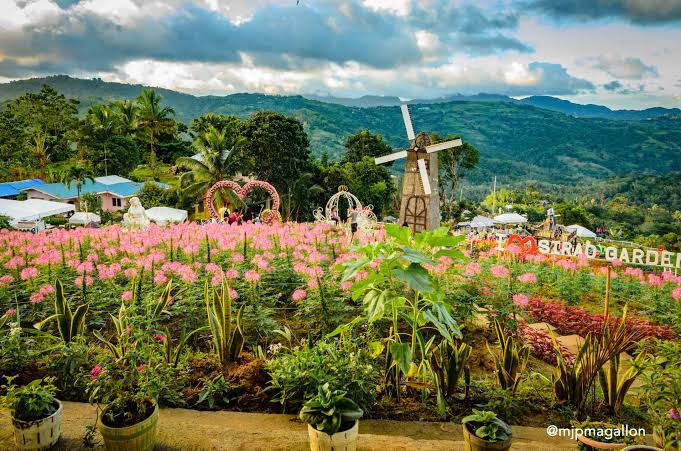
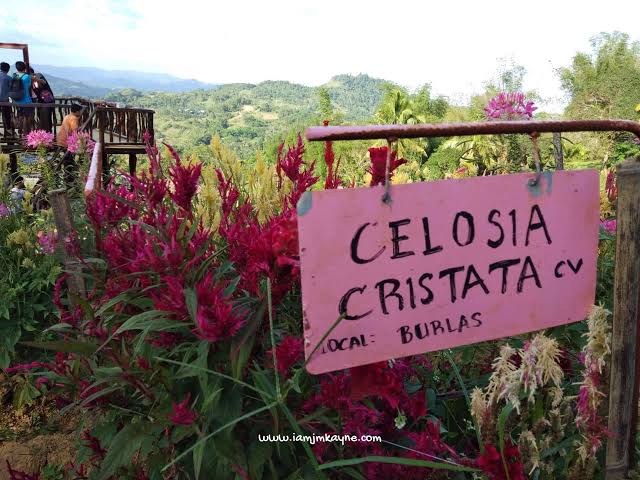
Recently, this farm became a trending destination in social media because it somewhat resembles the Amsterdam’s flower fields. Since its opening, the locals keep adding cute decorations like windmills, signage and figurines to entice more visitors. But what make the place more picturesque are the Celosia Flowers (or locally known as ‘Burlas’) in flame colors: yellow, red and orange.
In Cebu, Philippines, a so-called Mini Amsterdam is attracting tourists from all over the country and even foreigners. It is the famous Sirao Flower Farm located in a mountain barangay just few minutes from JY, Lahug, Cebu City.
Cebu Flower Tours
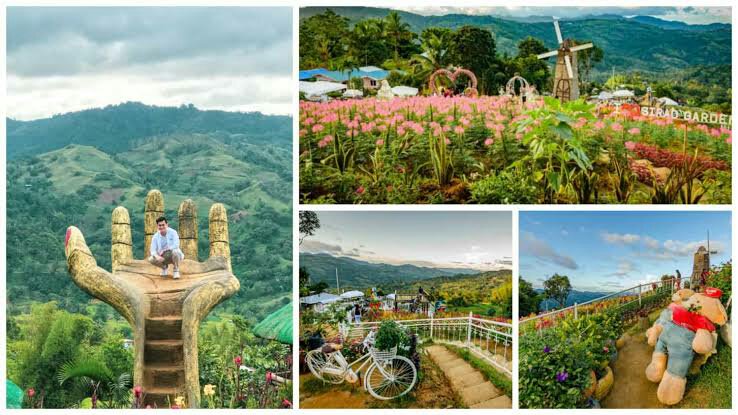
It all started when a couple planted flowering plants to be harvested and sold on All Souls Day. They then noticed that their garden is attracting visitors so they decided not to cut them at all. The incursion of tourists encouraged them to plant more. The more plants and flowers in the garden meant more visitors too. Since tulips and hyacinths are hard to grow in a hot climate, celosia flowers are grown in Sirao Flower Farm instead. These flowers are as colorful and attractive as the tulips.
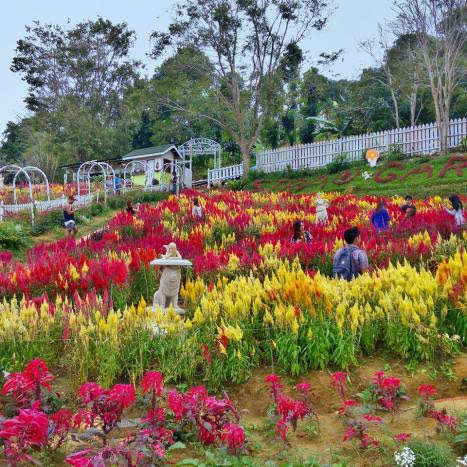
Celosia is the main flower grown in Sirao Flower Farm. This flower is considered to be a genus of edible and ornamental plants of the Amaranth family, Amaranthaceae. Its name was derived from the Ancient Greek word “kḗleos” which means “burning” and it refers to its flame-like flower heads.
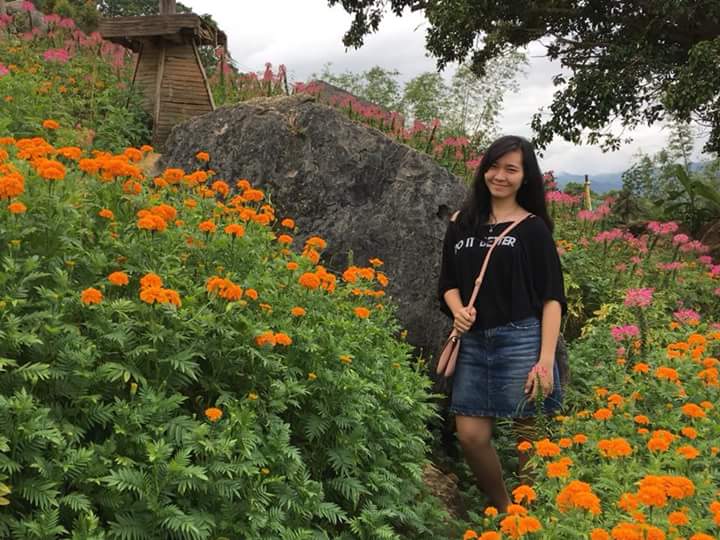
Aside from Celosias, other variety of flowers are grown in the farm. Flowers like sunflower, chrysanthemum, daisy and aster are among the flowers that are planted there. These flowers provide a perfect edge for picture taking.
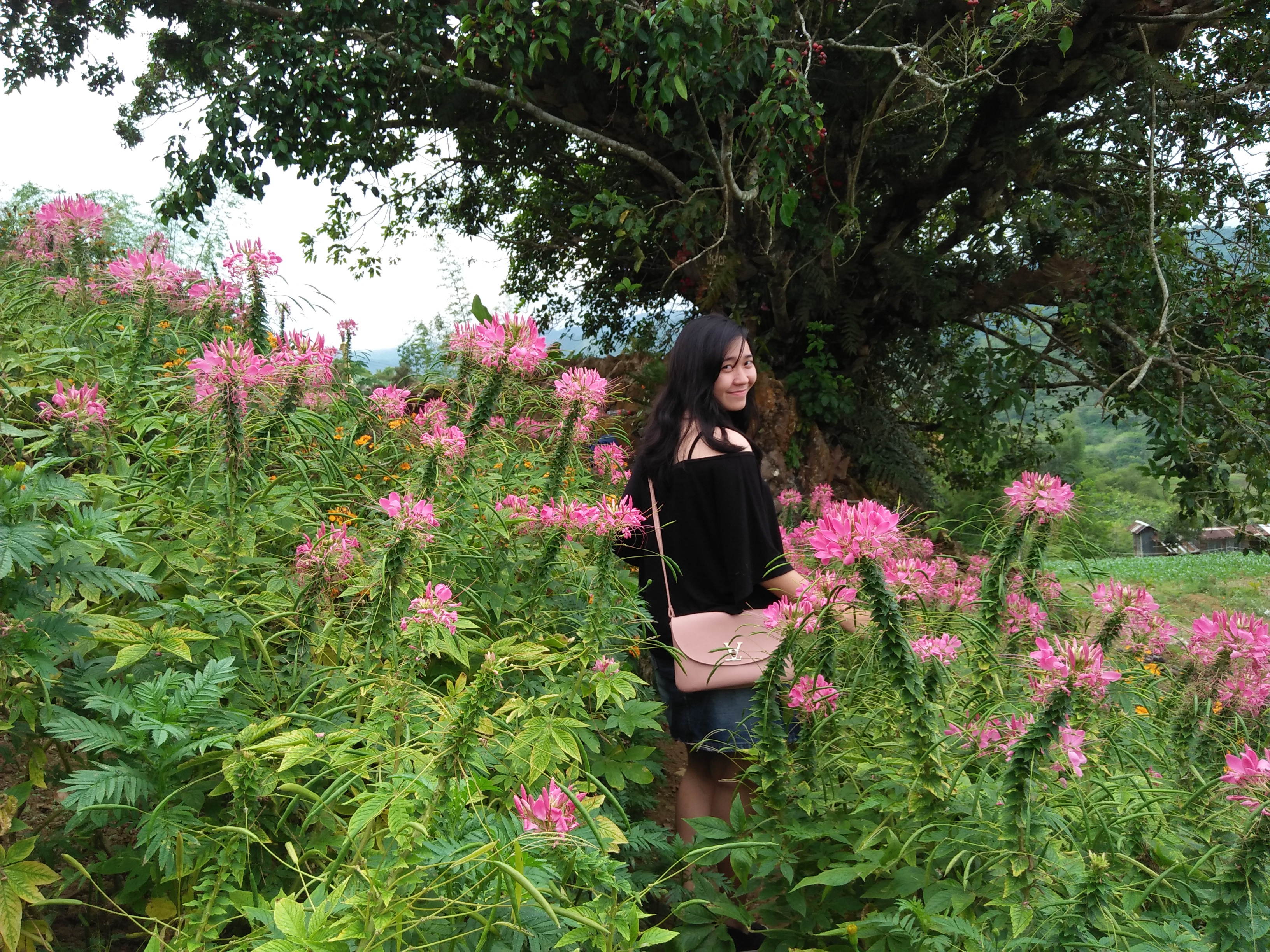
Cebu Sun FlowerRight now, the flower farm has become one of Cebus most visited tourist destinations.
How To Get There to Sirao Cebu
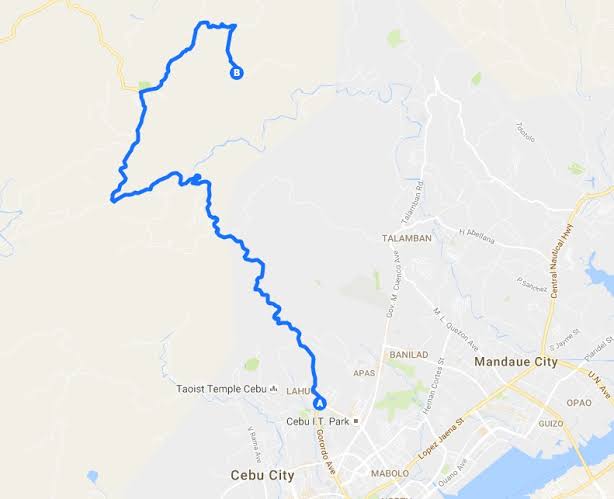
Since the opening of the Sirao Flower Farm, tourists in Cebu included the Mini Amsterdam in their bucket list. Here is a guide on how to get there:
From any point in Cebu, ride a cab or jeepney going to JY in Lahug, Cebu City.
In JY, there are lots of motorcycles for hire (habal-habal) that conducts regular trips going to the flower farm. Fare is more or less Php300.00 per person.
A taxi ride is also an option but it is way more expensive than the motorcycles.
When booked in a private city tour (with a car), a little negotiation with the tour company can be made with an additional fee to get to Sirao.
Entrance fee: P50 per head
Operating hours: 6AM to 6:30PM for all visitors; 6:30PM to 6:30AM for campers
Contact details: 0946 937 7891
Exact location: Brgy. Sirao, Cebu City. Going there in your own vehicle can save you from the hassle of transferring between vehicles and can save you from spending for the fare. Your landmark would be Ayala Heights, take a right turn to Sirao Flower Farm.
BY MOTORBIKE: From J.Y. Square Mall, take a habal-habal that will take you directly to Sirao Flower Farm for ₱400 roundtrip, good for 2 persons already. The driver may ask you for additional waiting fee of ₱100-200 per hour depending on your haggling talent. The ride will take 30-45 minutes to get there.
BY VAN: From the Ayala Cebu PUV Terminal, you can ride a v-hire going to Sirao for ₱50 /head (one-way). Ask the driver to drop you off near Sirao Flower Garden. From there, ride a habal-habal going to the flower garden but it may take time to find one from this point, fare is ~₱20-30 /head.
BY OWN CAR: Navigate with Waze or Google Maps and pin your location to “Sirao Flower Garden”. Parking fee is ₱20.
BY CAR / VAN FOR RENT: For van or car rentals, or to book an uphill tour (9 destinations in 1 day for only 999 pesos per person), book with our trusted travel partner SquadPH Tours and Travels.
Cebu Flower – Cebu Sirao FlowersTips for Sirao:
The best time to go to the flower garden is when the sun is up. So weather checking is a must before heading there. A perfect angle of pictures are best taken during a sunny day. Roads are also slippery when it’s raining making it unsafe to travel since it is mountainous.
Since motorcycles are the cheapest and quickest means to go to the flower garden, most tourists would prefer this. It is advisable to talk to the driver not to drive too fast to prevent accidents.
Make sure to check the batteries of cameras or cellular phones. Low batteries are a major disaster in a pictorial moment.
* Sirao Flower Farm can also be rented for exclusive events like Debut/Photoshoots and Prenups. Just contact them in numbers above for reservations and pricing
Experience the Beauty of Boracay!
Boracay is a small island in the central Philippines. One of the most popular tourist destinations in the Visayas, 350 kilometers south of Manila. It’s known for its resorts and beaches. There are 13 beaches on Boracay. The two main beaches- White Beach and Bulabog Beach- are separated by a 1-kilometer path with shopping, restaurants, and hotels. Along the west coast, White Beach is backed by palm trees, bars and restaurants. On the east coast, strong winds make Bulabog Beach a hub for water sports. Nearby, the observation deck on Mount Luho offers panoramic views over the island. Offshore, coral reefs and shipwrecks are home to diverse marine life.
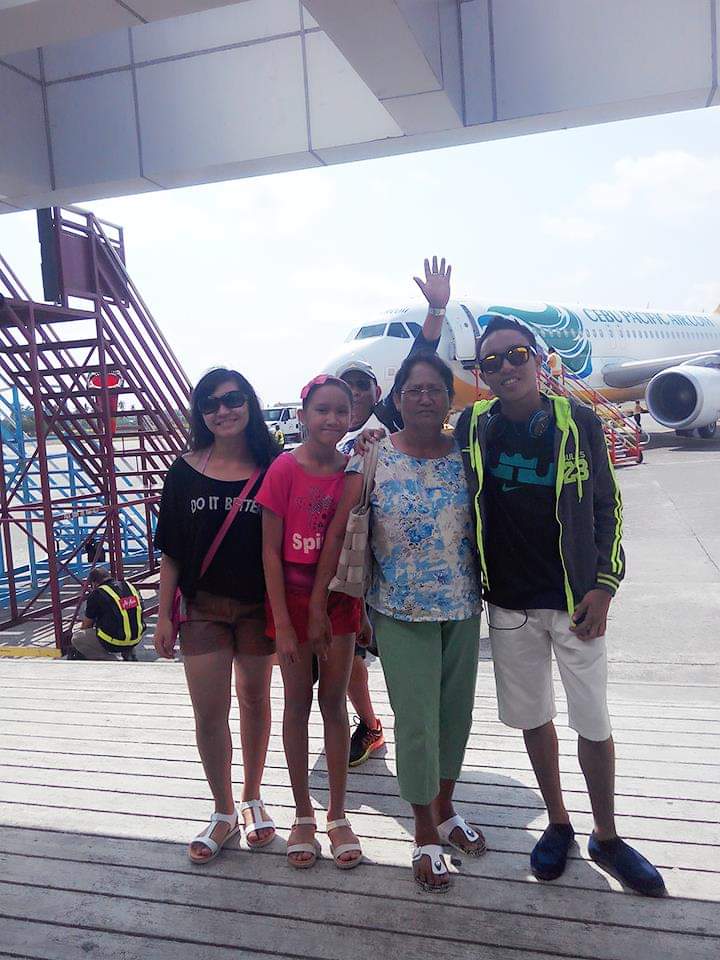
Fly into Kalibo Airport or Caticlan Airport on the island of Panay. From the airport, you can hop on public transport or take a short taxi to the ferry dock. Or if you’ve already booked a hotel, they’ll often offer a service where pickup and ferry tickets are included. There will be many Filipinos selling boat tickets from the airport so just follow their lead. You’ll then be taken to the Cagban Jetty where you’ll hop on a ferryboat to Boracay and your vacation will begin!
Let’s explore the best things to do in Boracay:
1.Ariel’s Point
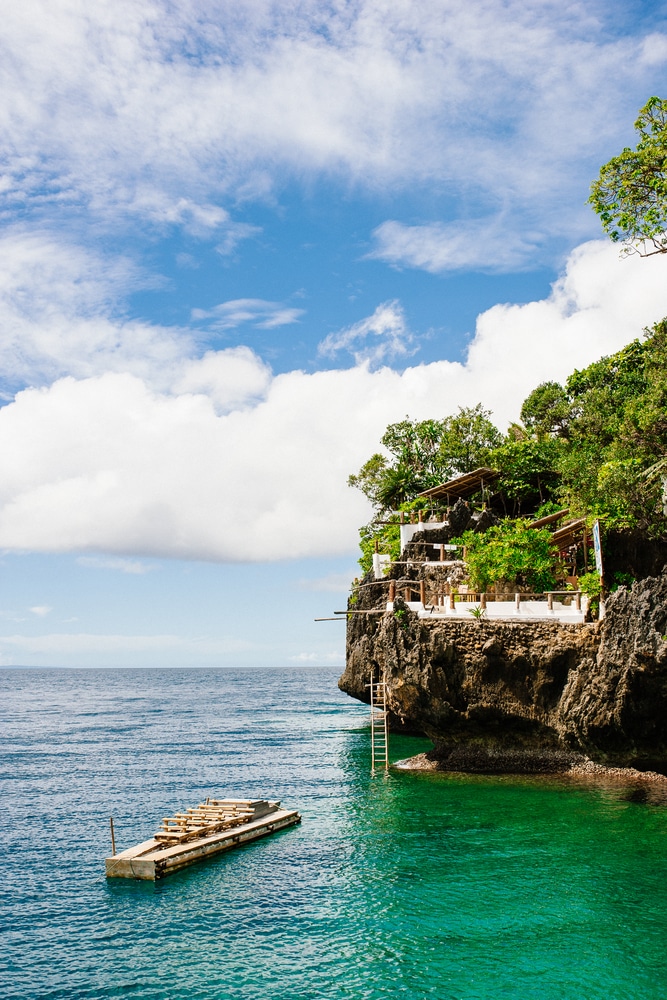
Conquer your fear of heights with a full day of cliff diving and water sports. You’ll be whisked out onto the open waters in a longtail boat along with a dozen other thrill seeking backpackers and travelers.
2. White Beach
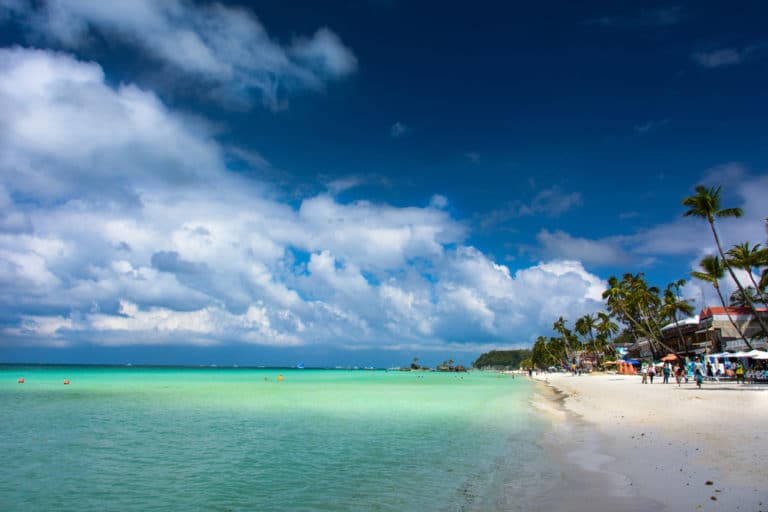
Boracay’s main beach is called White Beach. The sand is powder soft, the water is crystal blue, and the coconuts are cold.
3. Kite Surf on Bulabog Beach
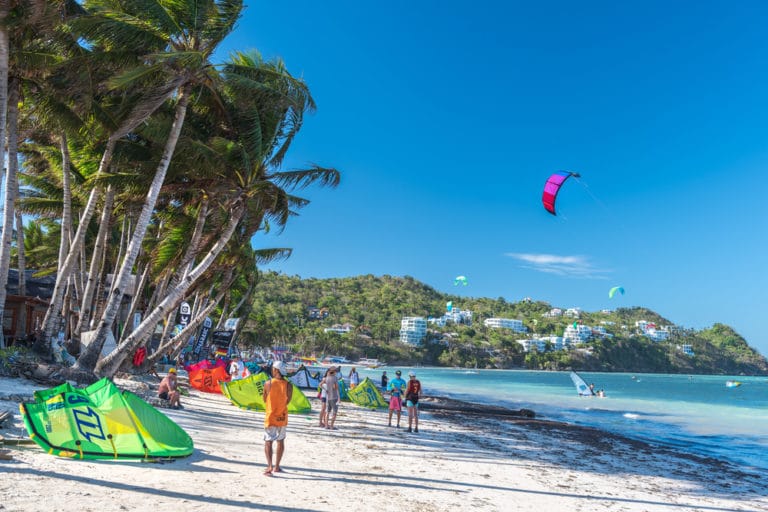
The wind strength on this beach is so strong that it whips your hair and blows sand in your eyes, but if you’re a kite surfer- this is paradise.
4. Puka Shell Beach (Yapak Beach)
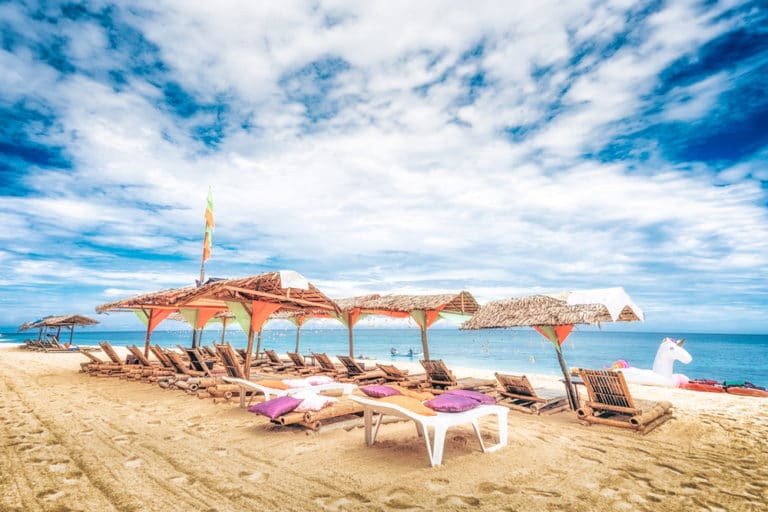
Puka Shell beach offers something that the other popular beaches do not: privacy. Puka Shell beach sees far less tourists than White Beach.
5. Diniwid Beach
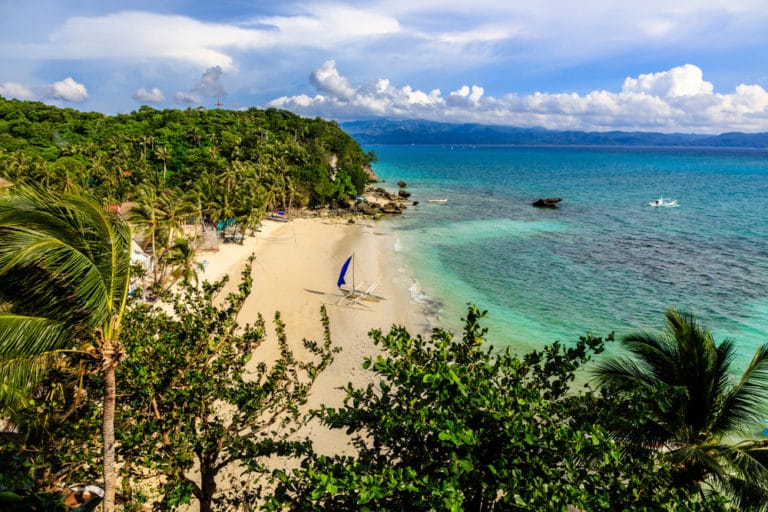
Mosey on over to Diniwid Beach to check out the real estate. This beach has a lot to offer in terms of guesthouses right on the water!
6. Zipline Boracay
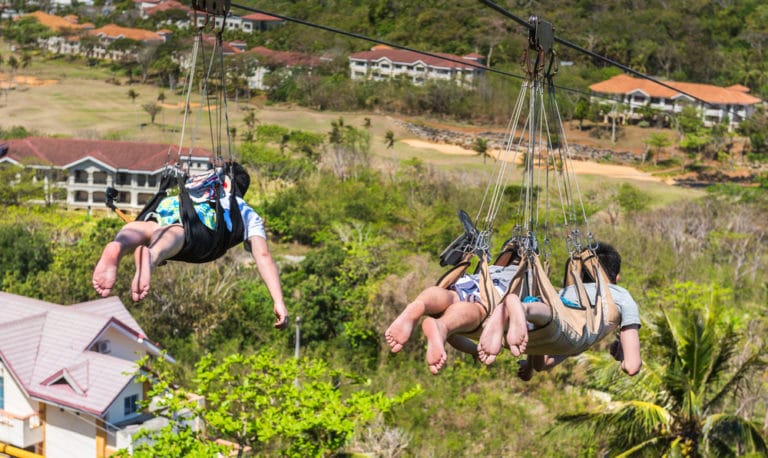
You can get stunning views of the whole island without having to do any hiking or physical excursion! Visit the zipline park where a cage-like gondola will pull you up to the top.
7. Ride the Zorb
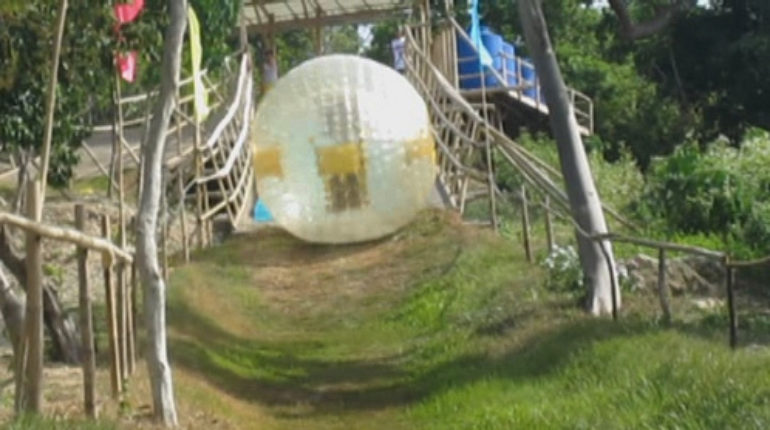
You can get in on this crazy fun activity at Zipline Boracay where you can just come for the zorb, or make it a package deal with the zipline.
8. Go Island Hopping
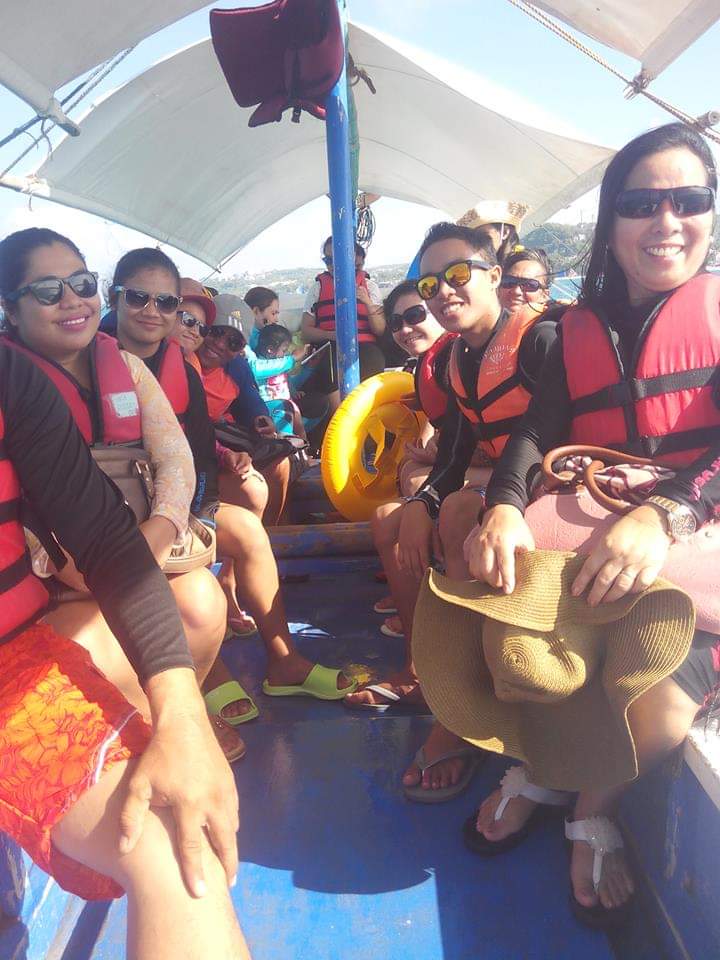
Join an all-day 6-hour island hopping tour on top of a classic catamaran equipped with a professional captain and attentive staff.
9. Parasail
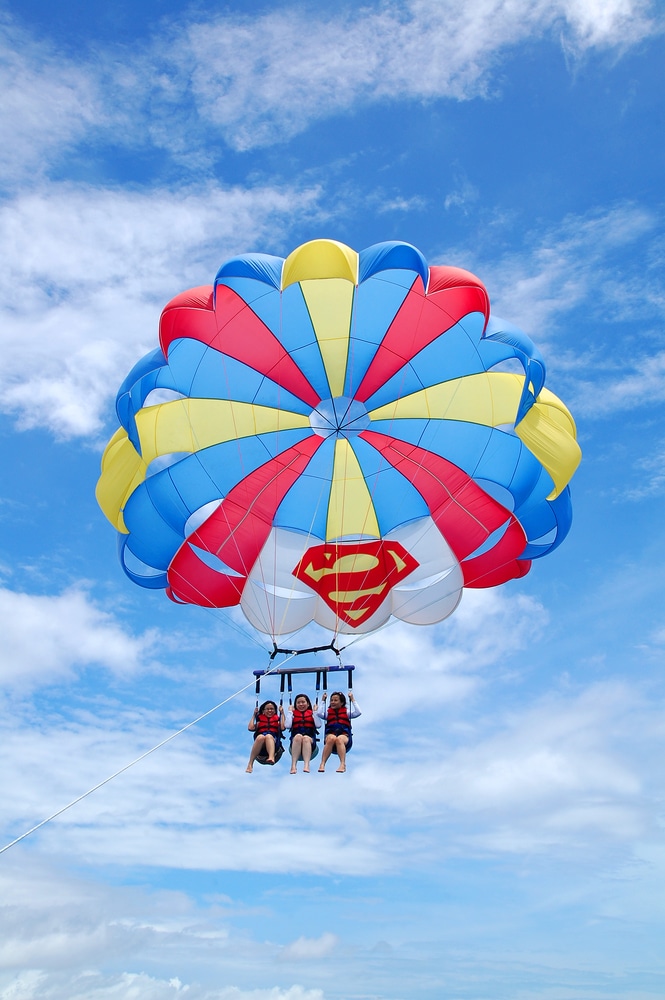
From any lounge chair or barstool on White Beach, you can look out onto the water and see parasails catapulting travelers and holidaymakers into the sky, as the big parachute is pulled behind a swerving speedboat.
10. Boracay Pub Crawl

Want to meet some new friends on the island? Lay of the land to discover the best pubs this piece of paradise has to offer? Get free shots and a free Boracay t-shirt? You should have answered ‘yes’ to all of those questions because this pub-crawl is awesome.
11. Bat Caves
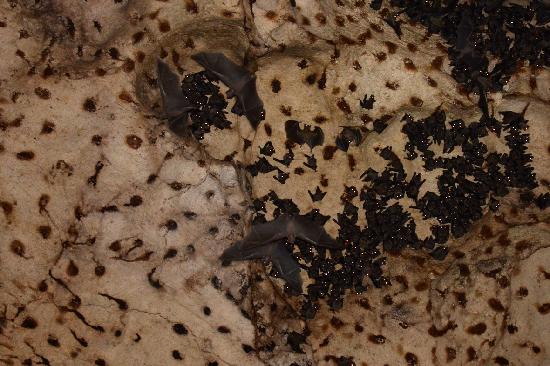
You’re in for more than just bats and caves when you sign up for a Bat Cave adventure.
12. Steampunk Boracay Bite Club Burgers

Come hungry. Come extremely hungry. The burgers at Bite Club Burgers are without a doubt the juiciest, most outrageously delicious burgers not only on this island, but also in this country.
13. Tirta Signature Massage
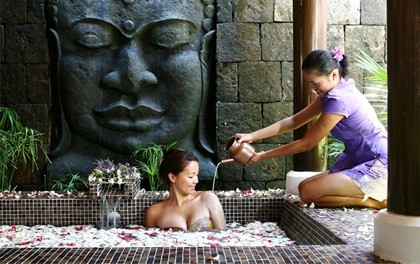
You’ve never had such a relaxing, detoxifying, and soul-purifying massage like the one you will receive at Tirta Signature Massage. Their 1.5 hour signature massage combines all of the best styles of massage in one: Swedish Massage, foot reflexology, therapeutic aroma massage, and a process called “lymphatic drainage” where they press on your lymph nodes to release the toxins.
14. Filipino Cooking Class
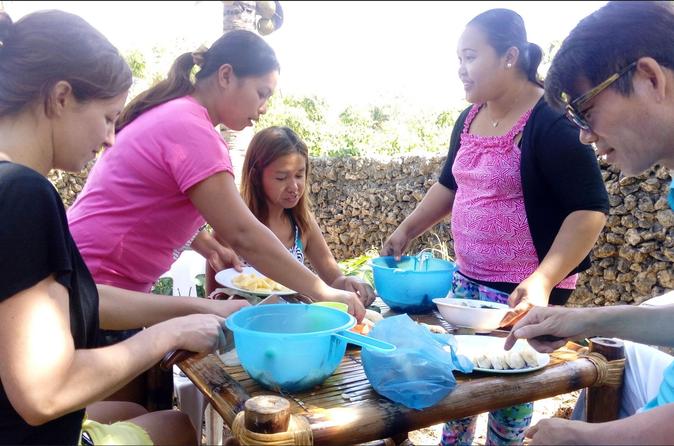
Go home with more than just a Boracay tote bag; go home with some cooking skills that will stick with you for a lifetime!
15. Do Some Shopping
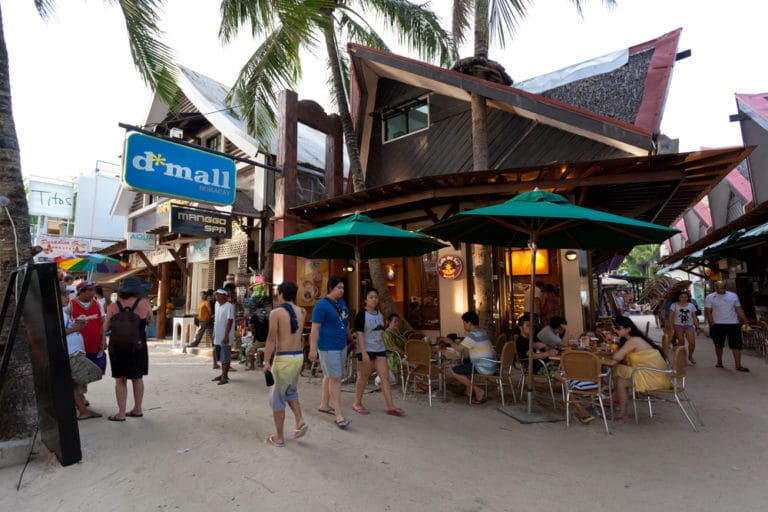
Handicraft stores and clothing shops line the path between White Beach and Bulabog Beach.
16. Learn to Freedive
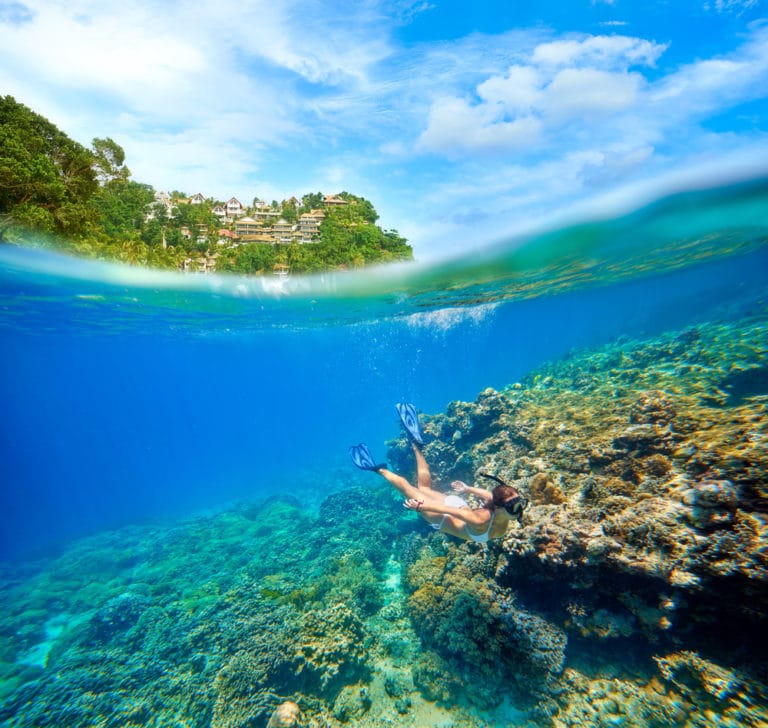
Learn to dive by working with highly skilled and super passionate freedive instructors, you can push yourself beyond what you thought your body was capable of.
17. Ilig Iligan Beach
This beach is relatively unbeknownst to travelers, which means more space and more attentive service for you!
18. Go Scuba Diving
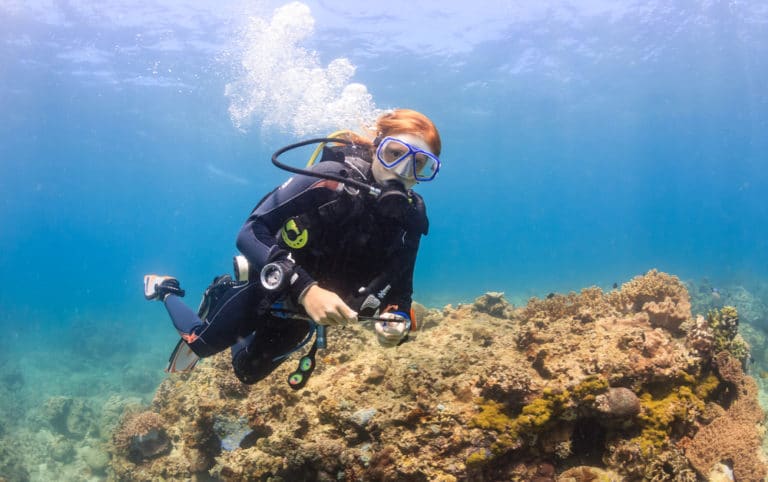
Visit the island from April to June and you will experience some of the best diving of your life.
19. Philippine Mermaid Swimming Academy
A dream come true for both kids and adults, you can transform into a mermaid on the island of Boracay.
20. Island Nature Tour
Boracay Adventures Company offers a glimpse into Boracay wildlife on their 2-hour island tour.
21. Willy’s Rock
Special touches that makes Boracay so unique are map-worthy natural markers such as Willy’s Rock.
22. Crocodile Island
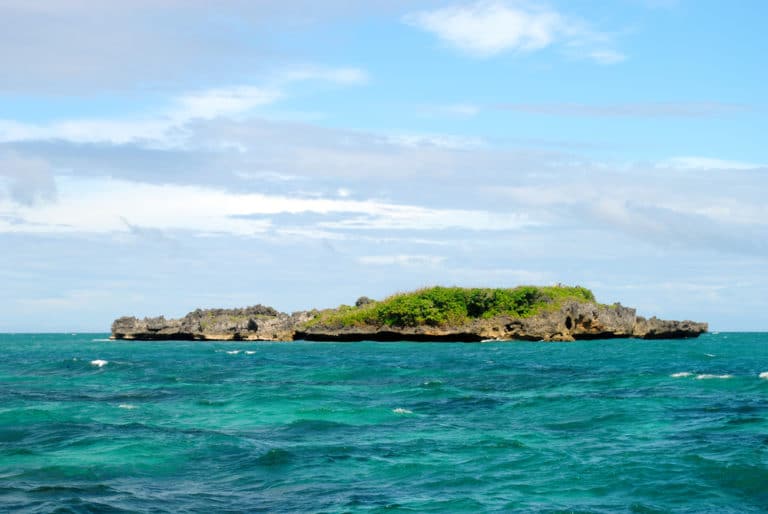
Don’t worry, there aren’t actually any crocodiles on this island! As you will see when approaching the island, it genuinely resembles a large crocodile both in shape and texture from the foliage. Surrounding this bizarre island is some of the best snorkeling in Boracay. You are bound to see some amazing underwater scenery and wildlife.
23. Crystal Cove Island
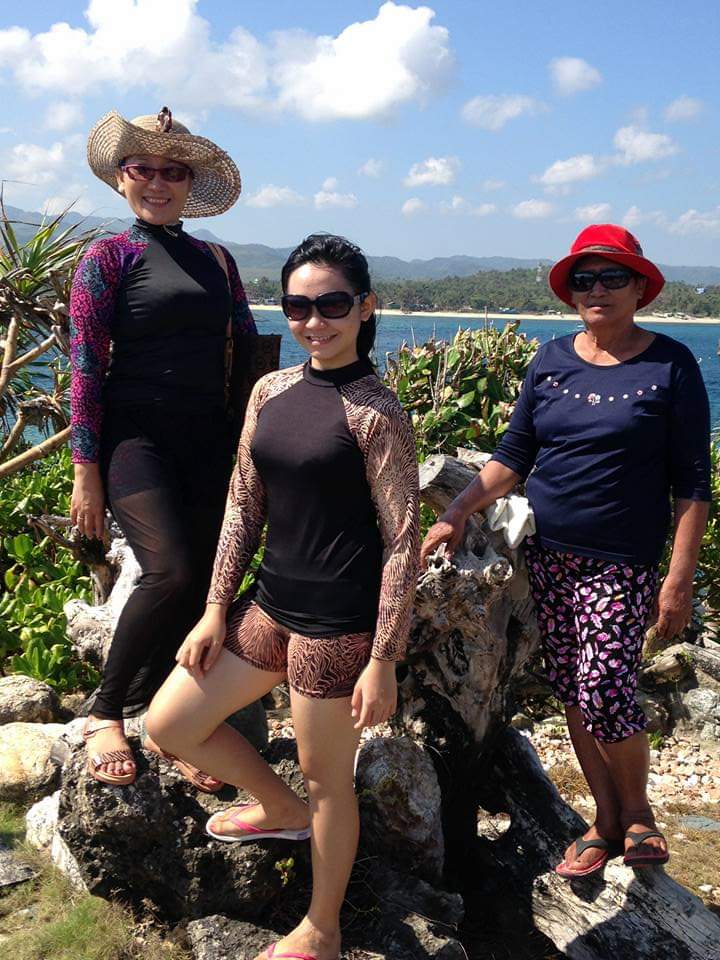
20 minutes from the shore lays Crystal Cove Island- a small island with pristine white sand beaches and quirky huts, play places and sculptures scattered all around.
24. Smoke Hookah
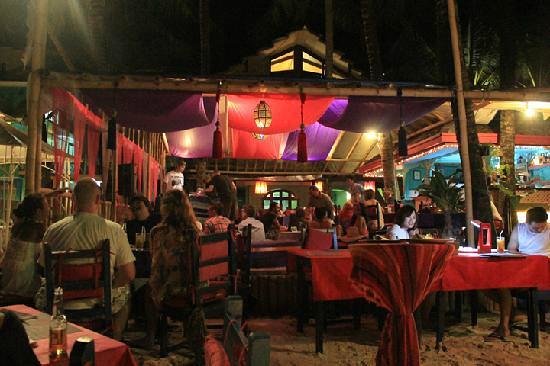
Kasbah Moroccan restaurant offers cozy seating right on the beach where you can smoke hookah as the sun goes down.
25. Fusion Sports Bar
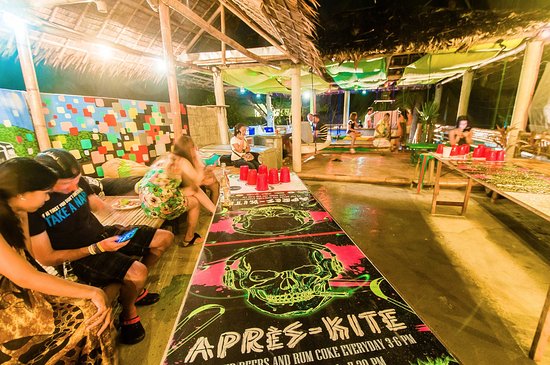
Drink, eat, laugh, and chill out at Fusion Sports Bar.
 Aventurier